
Introduction: commitment to water efficiency in the rendering industry
The rendering industry faces complex challenges in water management due to the high organic load, presence of fats and variability of the effluent. In this context, at J. Huesa we have designed, custom-built, implemented and commissioned an effluent treatment plant that provides a comprehensive solution for a client in the sector located in Seville.
After a rigorous process of on-site testing and pilot trials at our facilities, we defined the optimal technology capable of guaranteeing the water quality required for internal reuse. The result: a WWTP equipped with MBR technology, with a treatment flow rate of 300 m³/day, designed to convert complex waste into a strategic resource for industrial activity.
In this success story, J. Huesa has taken on all phases of the project:
• Detailed engineering (following the pilot tests carried out)
• Manufacture and supply of equipment.
• Systems integration and automation.
• Installation at the plant.
• Commissioning and operational optimisation.
This comprehensive approach guarantees the customer a turnkey solution, customised and supported by our technical team throughout the system’s life cycle.

J. Huesa’s work team during commissioning
Characterization of effluent and customer requirements
The industrial process of producing fats and proteins for animal feed generates highly polluting waste streams. Among the most critical parameters identified are high COD, nitrogen, oils and fats, and suspended solids. The client needed a robust solution that would ensure compliance with environmental requirements and allow part of the treated water to be reused for watering green areas and as feed water for cooling towers.
We started from an initial situation in which, after biological treatment, the effluent was clarified using a DAF, obtaining the following average values for the effluent:
| Parameter | Average value |
|---|---|
| pH | 7,7 |
| Conductivity (μS/cm) | 5.602,2 |
| COD (mg O2/l) | 219,2 |
| SS (mg/l) | 19,3 |
| Oils and Fats (mg/l) | 41,3 |
| Ntotal (mg/l) | 638,4 |
| Ptotal (mg/l) | 1,5 |
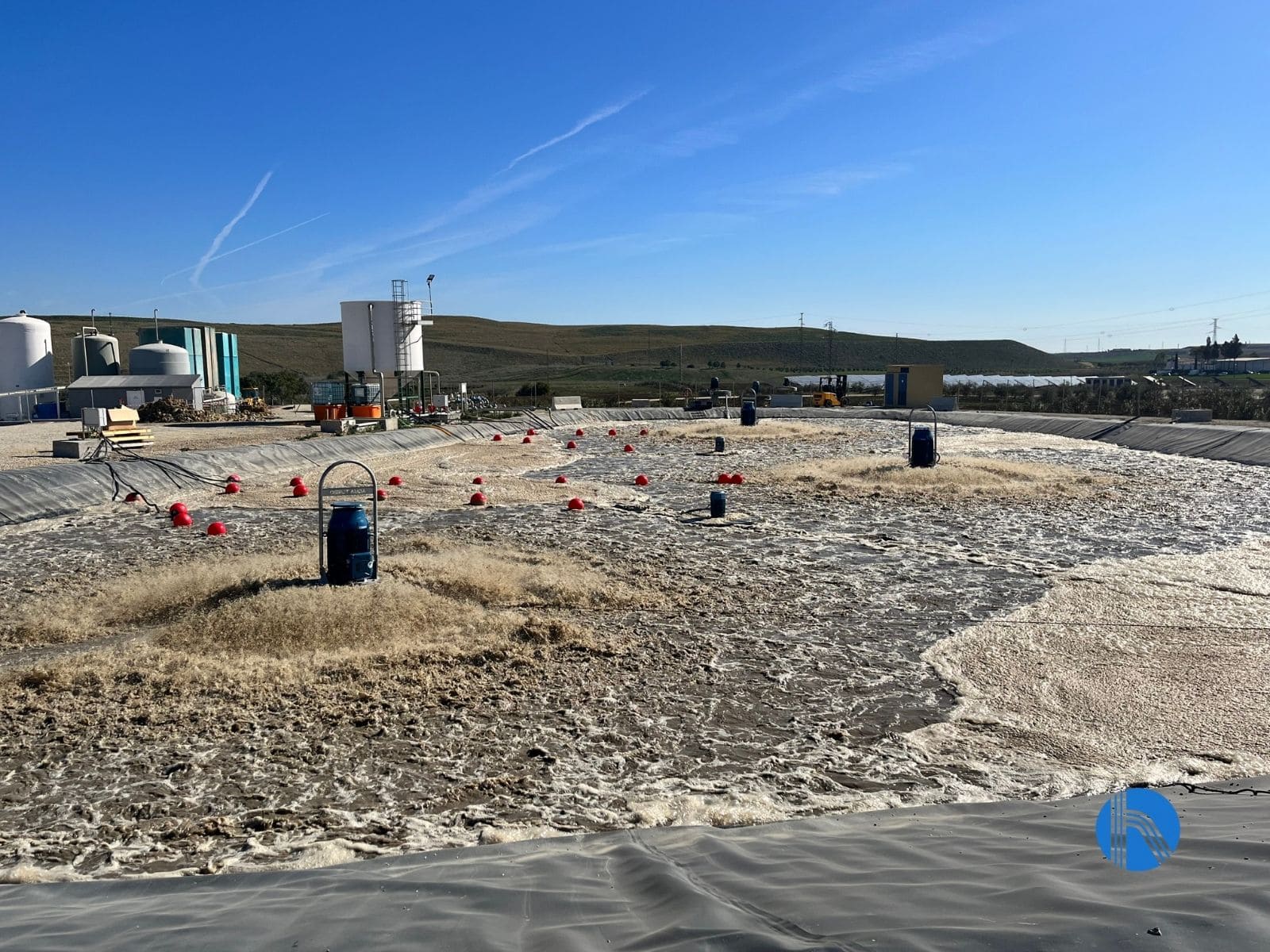
View of the customer’s existing ventilation system
The pilot tests carried out, both at the customer’s facilities and at J. Huesa’s R&D&I laboratory, using tubular ultrafiltration MBR technology, showed the following key performance results:
- SS < 10 mg/L
- Oils and Fats < 10 mg/L
- The reduction in COD will be associated with suspended solids, oils and fats removed by the MBR. A reduction of up to 50% was achieved.
The pilot tests carried out showed that the presence of fats and fine solids complicated clarification and that the quality required for reuse demanded higher-performance technology. This led to the solution evolving towards an MBR.
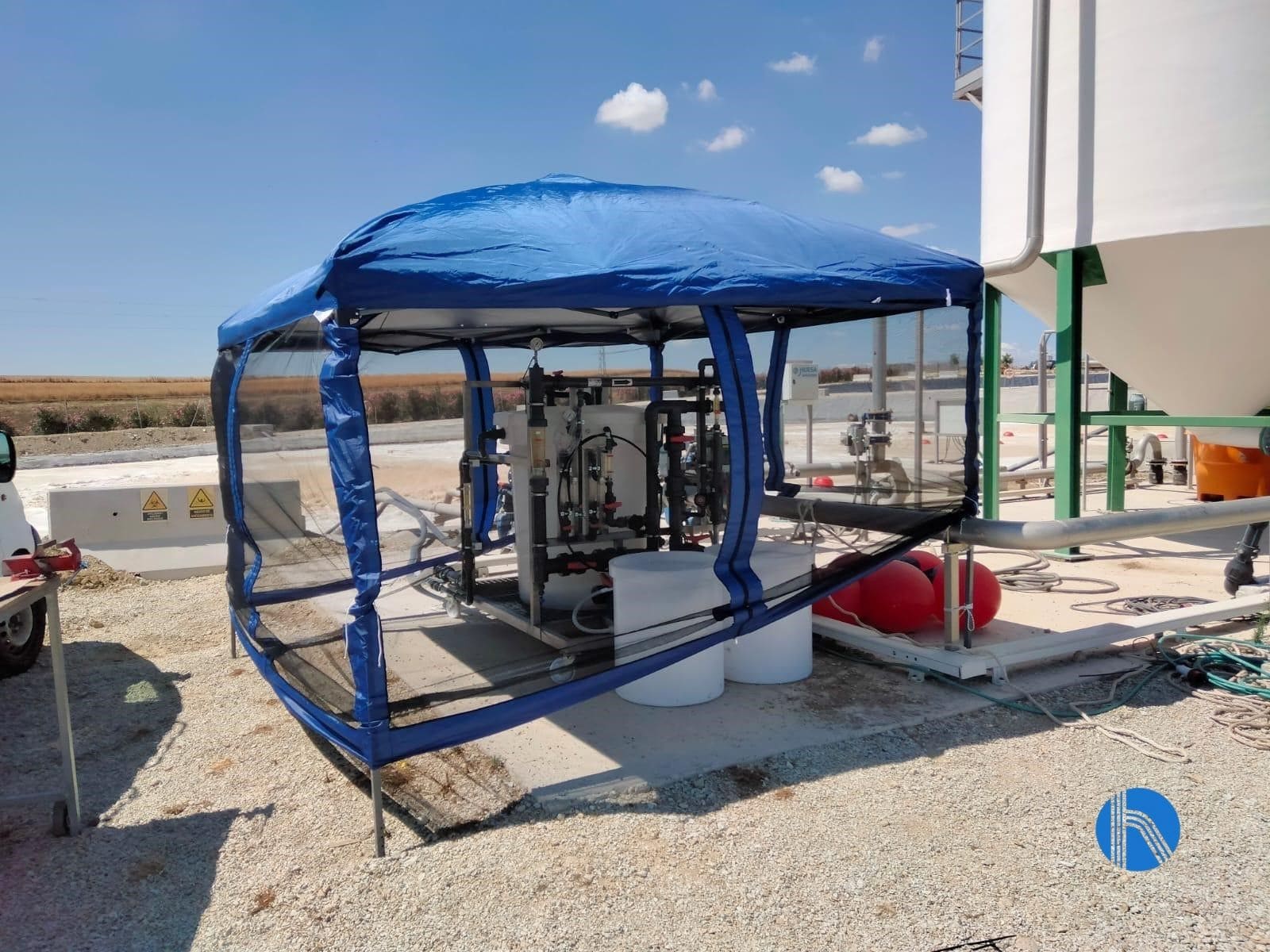
View of the pilot plant on site
Technical description of the designed MBR solution
- Design flow
The nominal capacity of the plant is described in the following table:
| Design flow | 15 m³/h |
|---|---|
| Daily design availability | 20 h/day |
| Total daily flow | 300 m³/day |
| Raw water storage (mixed liquor) | 100 m³ |
| Treated water storage (UF permeate) | 4 x 75 m³ (2 of which already exist at the customer’s site)) |
| Used of treated water | Washing – Cooling towers |
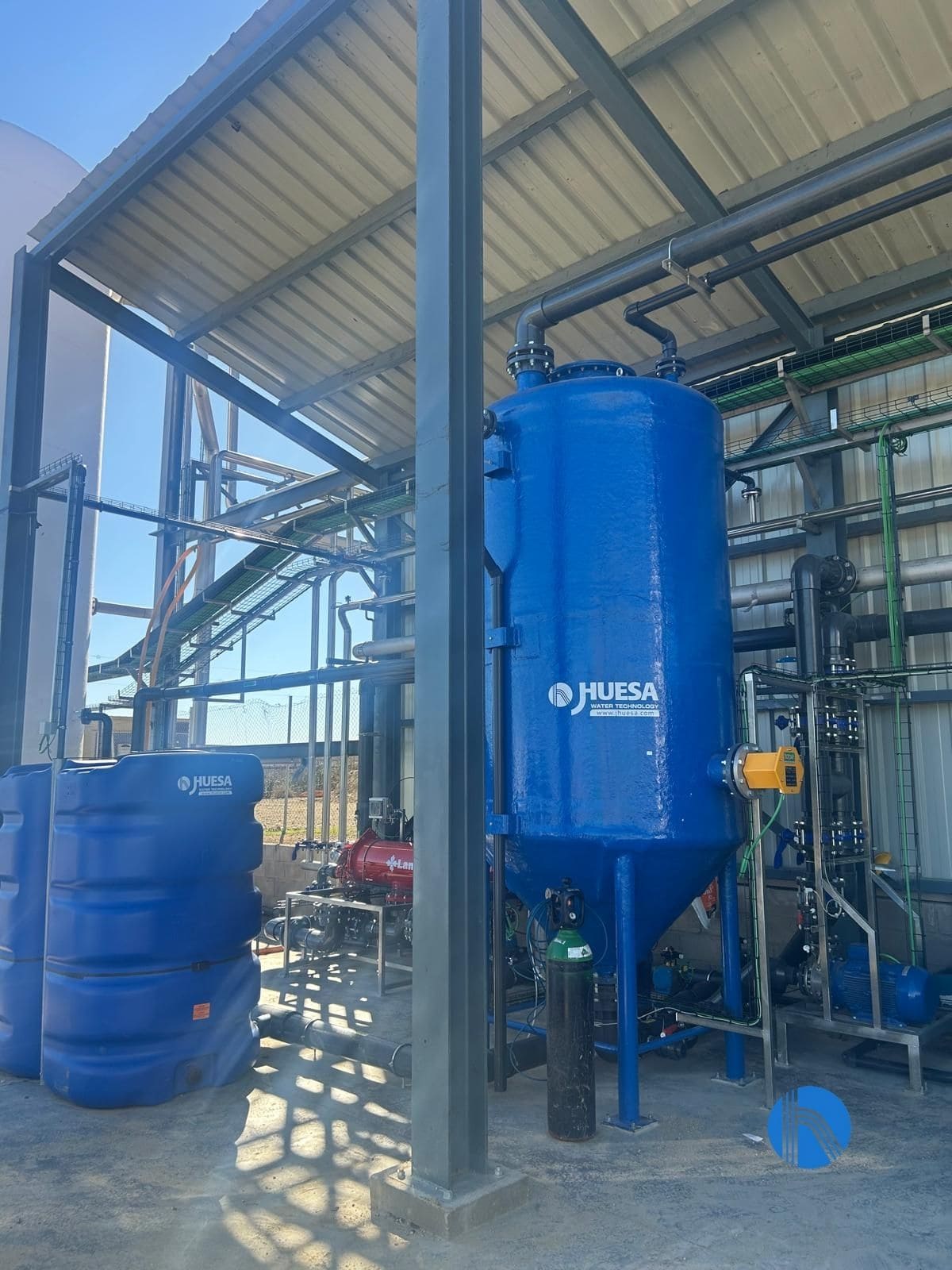
View previous filtration system
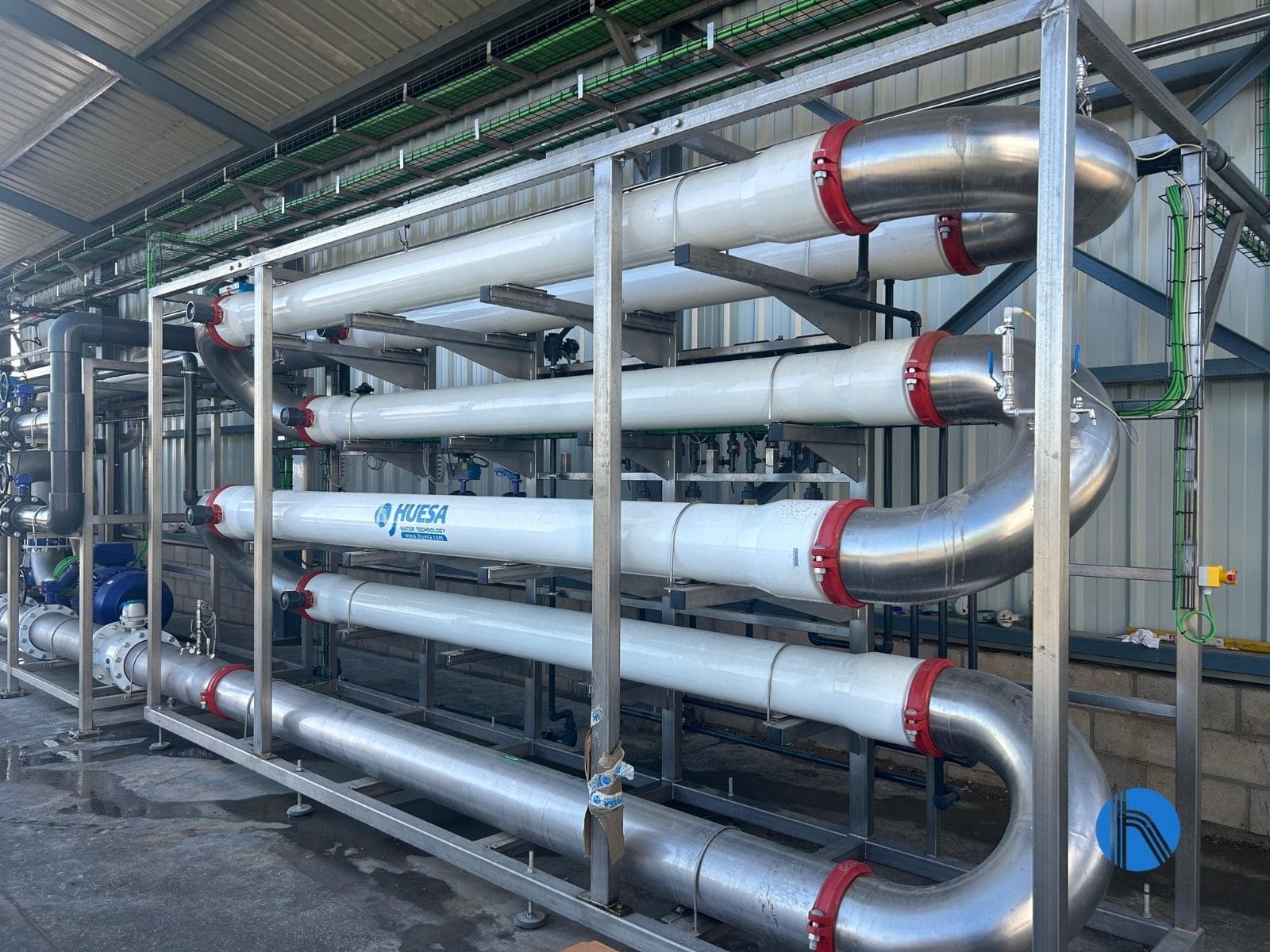
- Ultrafiltration skid
Ultrafiltration is a pressure-controlled membrane separation process. The membranes separate a feed stream into a retentate (more concentrated) and a permeate. The permeate obtained is free of suspended solids, bacteria and viruses.
It has been configured on a stainless-steel skid into which tubular ultrafiltration membranes have been integrated, including a CIP cleaning system using flushing.
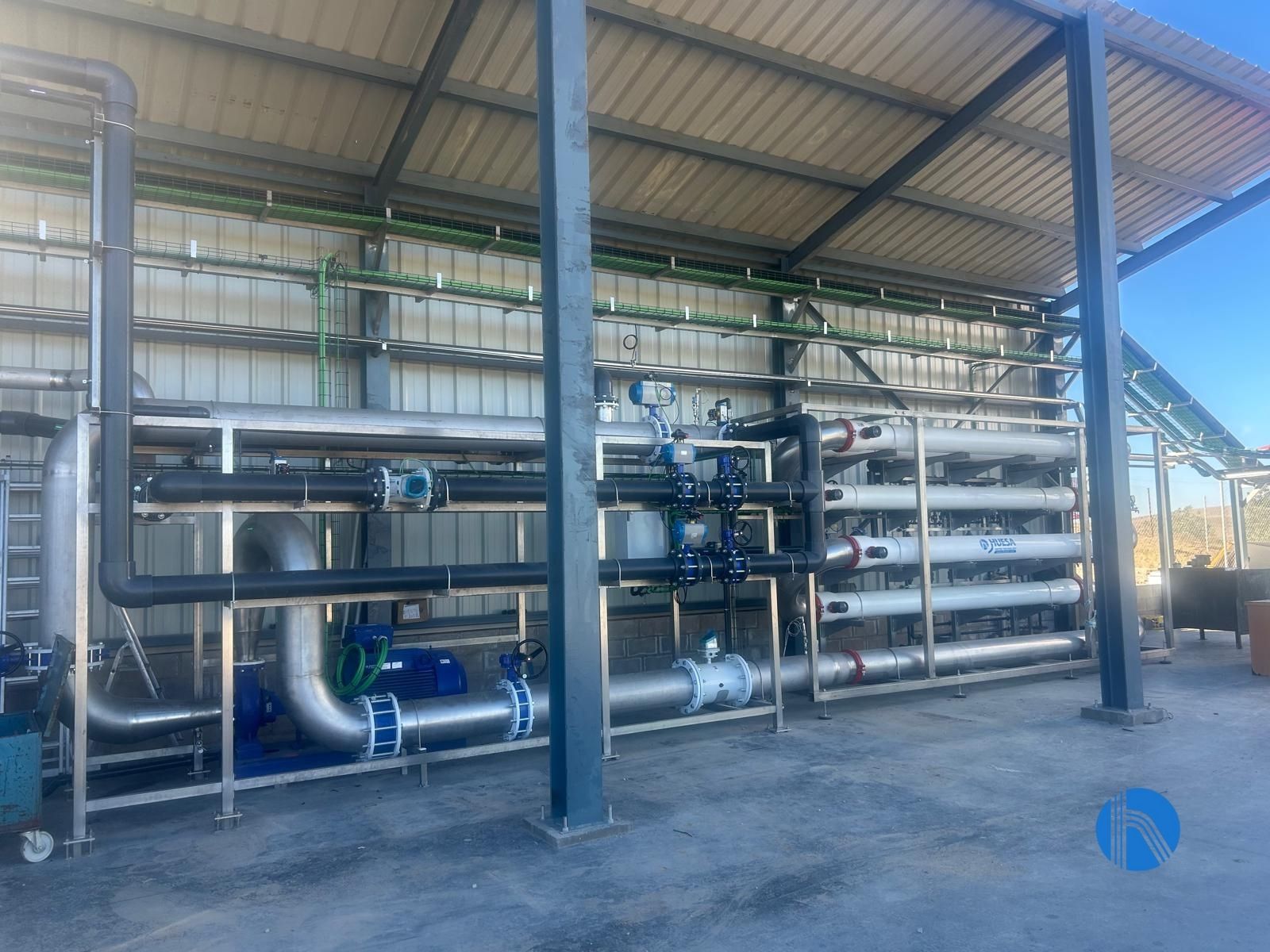
Ultrafiltration skid view
- Disinfection system
A disinfection system has been installed at the MBR outlet, consisting of a chlorine dosing and control system in recirculation with a flow rate of 12.5 m3/h installed on a stainless-steel skid, in which chemicals are dosed to adjust the water to the required chlorine and pH values.
This system consists of recirculating the permeate (or a portion thereof) through a chlorine dosing skid and a contact circuit until a chlorine-free residual and the contact time necessary for the required disinfection are achieved and maintained.
It is commonly used in industrial facilities where the aim is to guarantee the microbiological quality of water used for processes or storage, without excessively increasing investment or operational complexity.
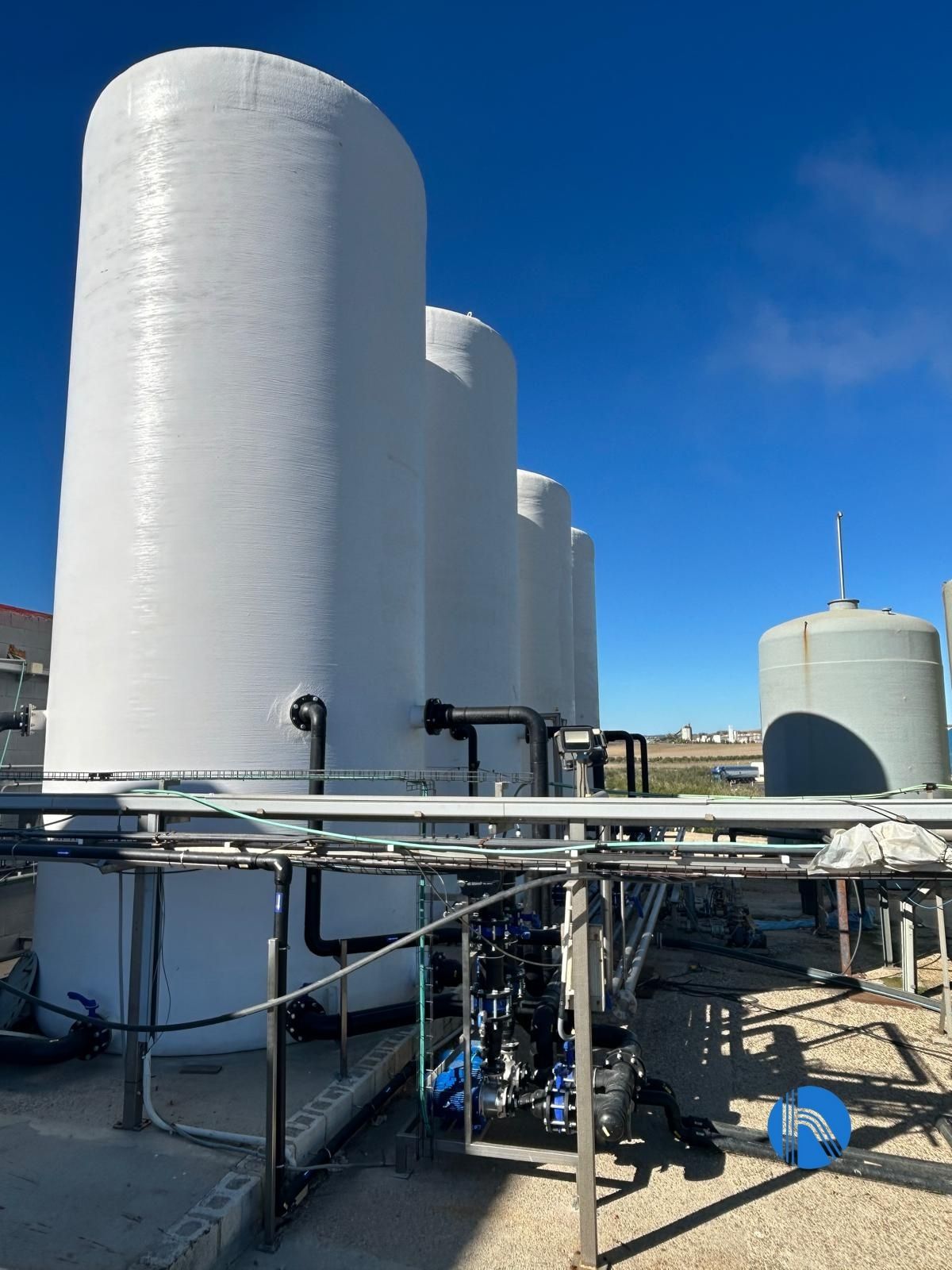
View permeate water accumulation tanks and recirculation system
- Instrumentation and control
The WWTP is equipped with instrumentation and control elements that communicate with the programmable logic controller included in the control panel.
The Instrumentation and Control team at J. Huesa has designed the control panel so that it can be integrated into the customer’s SCADA system. It also includes a remote control system.
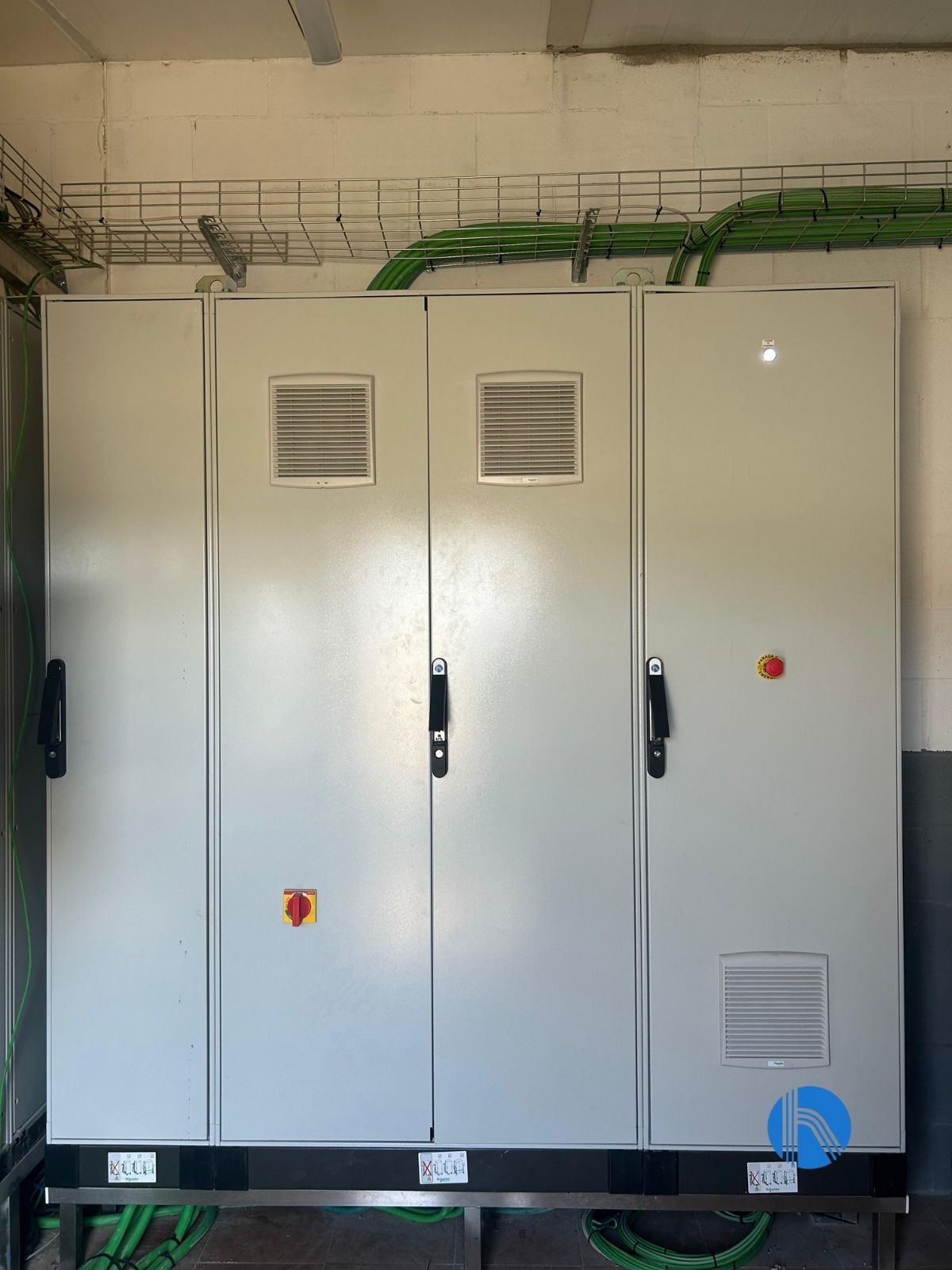
Electrical panel view
Benefits obtained by the customer
The commissioning of the new WWTP, using MBR, brings several tangible improvements for our client:
• Water quality is suitable for reuse, reducing external water consumption.
• Significant reduction in water footprint.
• Greater operational stability in the face of process variations.
• Optimisation of grease treatment and nitrogen removal.
• Improved odour control and working environment.
• Alignment with the client’s environmental and circular economy objectives.
Conclusion
This project is an example of how customised engineering, based on data, pilot studies and specialised technical knowledge, can transform water management into a key element for industrial competitiveness.
If your industry works with complex effluents and is looking to move towards water reuse, contact our technical team and tell us about your project. At J. Huesa, we continue to promote solutions that combine innovation, reliability and an approach that is fully adapted to each sector, developing comprehensive solutions that turn challenges into opportunities.