
1. Introduction
The sustained growth in demand for plant-based proteins is driving the agri-food industry to optimize its production processes, where water plays a critical role both as a raw material and in auxiliary services.
In this context, a leading multinational in the extraction and production of plant-based proteins, with a production facility in Andalusia, faced the challenge of increasing its production capacity by approximately 40%, whilst maintaining the required quality standards in its processes and ensuring operational reliability.
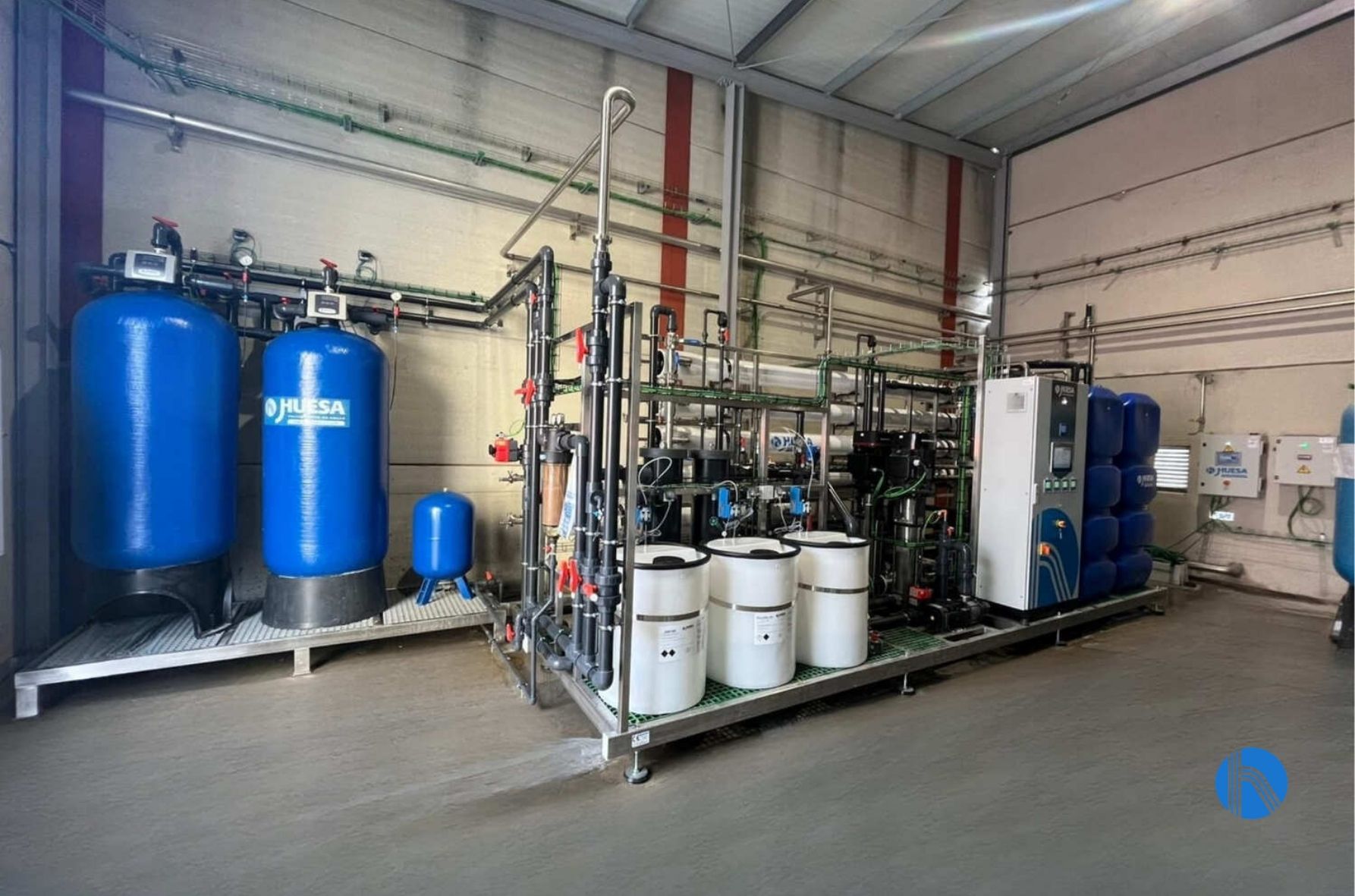
Following a detailed technical analysis, the optimal solution was identified as the design and implementation of a feedwater treatment system based on double-pass reverse osmosis, combining new installation with the refurbishment of existing assets to maximize efficiency and sustainability.
2. Technical description of the adopted solution
Having analysed our client’s technical requirements, the technical team at J. Huesa opted to design a robust solution based on three key pillars:
• Robust pre-treatment, designed to ensure membrane protection and operational stability.
• A double-pass reverse osmosis system, ensuring the quality required for the process.
• An advanced control and instrumentation system, enabling optimized operation and full traceability.
The following flow rates were used as the basis for the design:
| Operating hours | 24 h |
| Average flow rate, RO stage 1 | 12 m³/h |
| Average flow rate, RO stage 2 | 10 m³/h |
| Daily volume | 761,2 m³/day |
| Design water temperature | 15 ºC |
| Treated water storaged | Client (to be confirmed) |
2.1 Pretreatment
The pre-treatment process has been designed to condition the feed water and ensure optimal operating conditions for the membrane system, minimizing the risk of fouling, scaling or degradation, bearing in mind that upstream of the reverse osmosis system there is a series of activated carbon filters which ensure that the water supplied to the reverse osmosis system is free from chlorine.
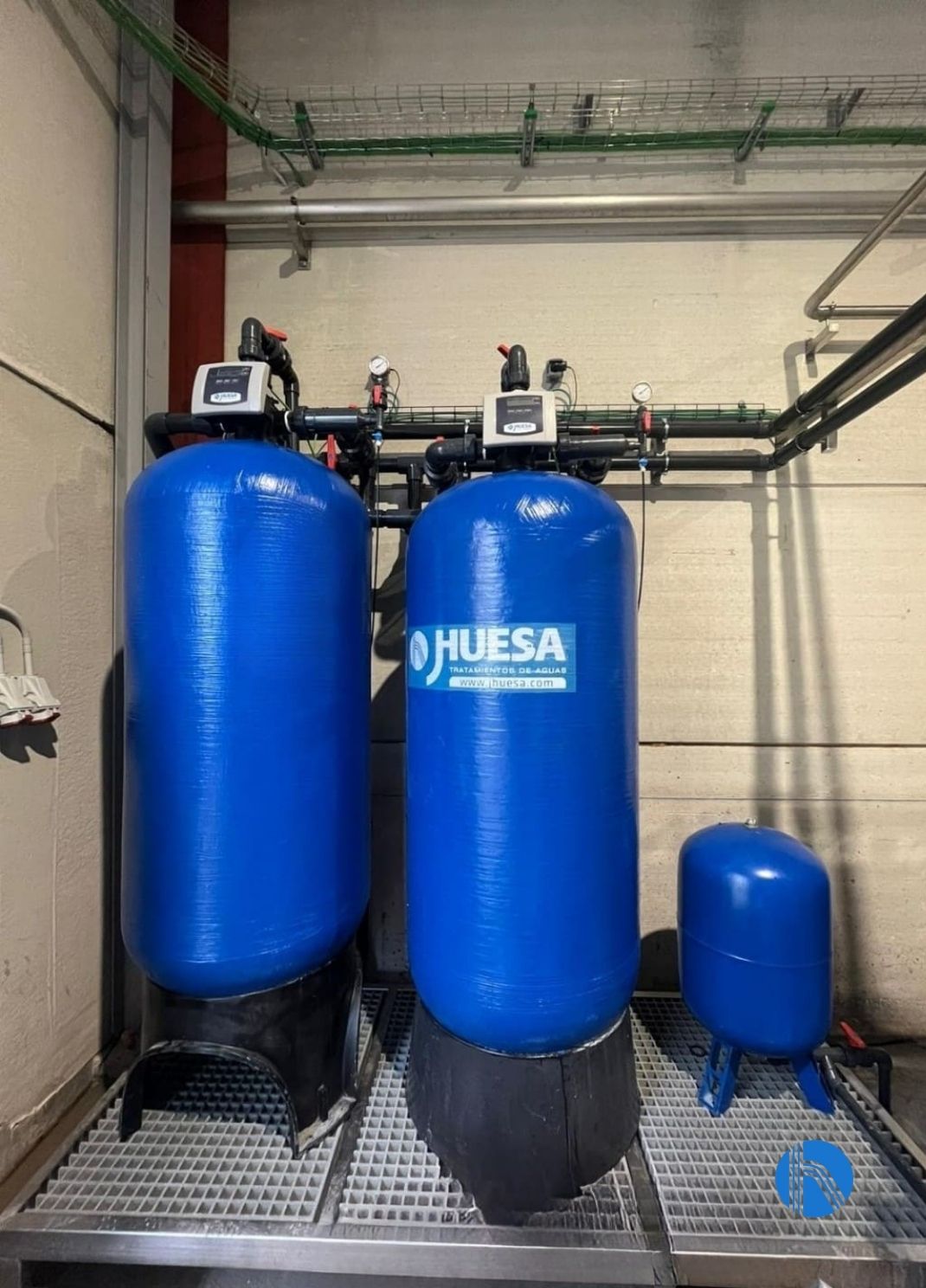
View of the pre-filtration system
Next, chemicals are dosed into the water before entering the pressure pipes; specifically, an anti-scaling agent and a sequestering agent in the first stage, followed by a pH regulator in a second stage to adjust the pH value at the reverse osmosis inlet.
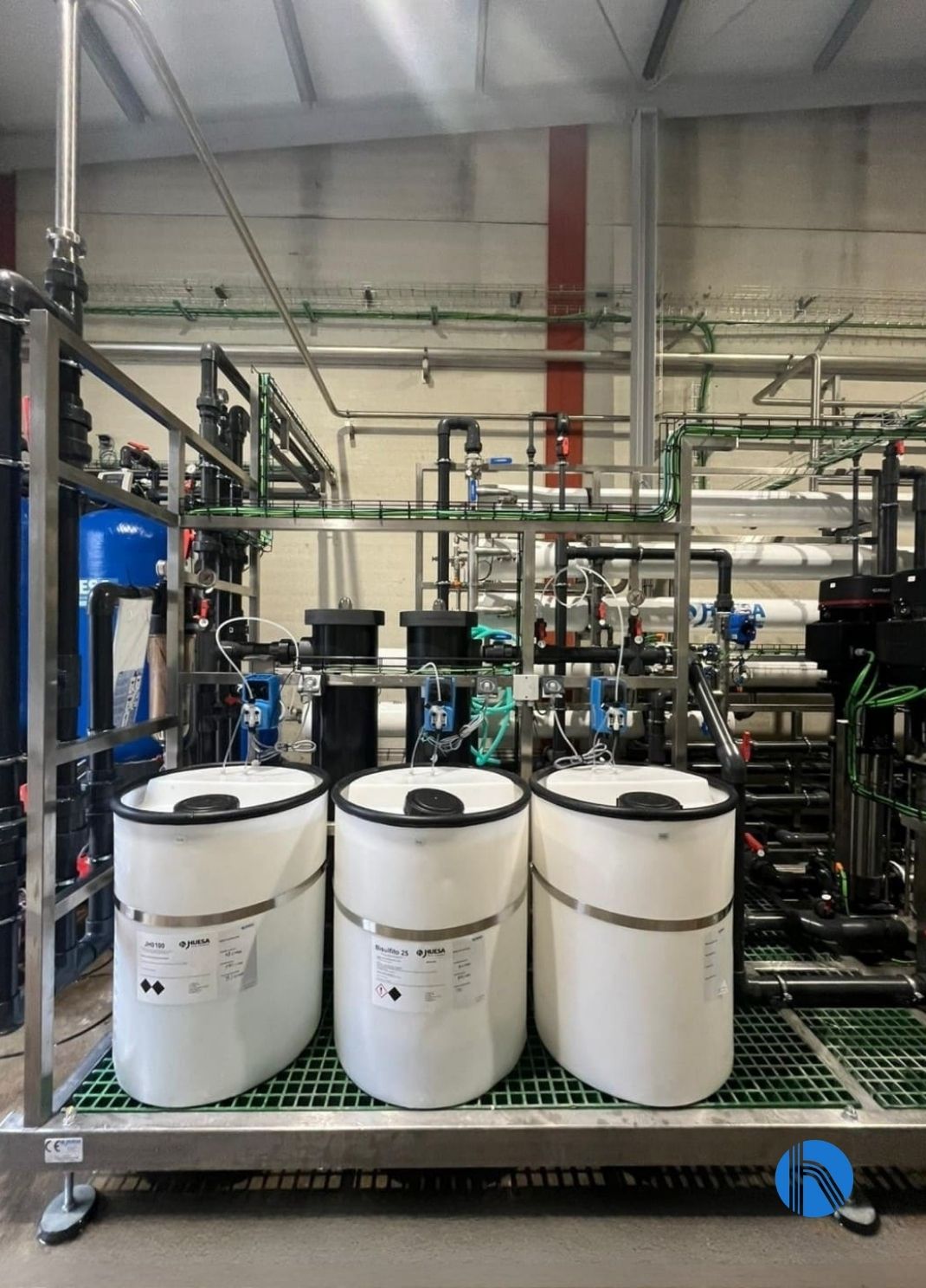
View of the dosing system
The pre-treated water then passes to the reverse osmosis module, where it is first filtered through 5-micron pore size cartridges that retain any very small particles (suspended solids and colloids).
This approach ensures high operational stability and extends the service life of the membranes.
2.2 Two-stage Reverses Osmosis (RO)
At the heart of the plant is a two-stage reverse osmosis system with a production capacity of 10 m³/h, specifically designed to meet the quality requirements of the production process.
The plant is equipped with spiral-wound membranes, made of polyamide and specifically designed for brackish water up to 8000 ppm, capable of operating at low pressure.
These membranes have high chemical resistance, as they can operate within a pH range of 2 to 11, making them easy to clean and recover, as they are compatible with a wide variety of cleaning chemicals.
For monovalent ions, separation selectivity varies between 90% and 95%. For divalent ions, selectivity exceeds 98%, and for mineral or organic colloids, bacteria and viruses, this selectivity reaches 99.9%. The membranes will be mounted in a single pressure housing, manufactured from GRP.
First stage of Reverse Osmosis (new installation):
- Removal of dissolved salts, organic matter and contaminants.
- Production of a high-quality permeate to feed the second stage.
Second RO stage (refurbishment of existing plant):
- Integration of the existing plant through refurbishment.
- Improved performance and adaptation to new operating conditions.
- Final water polishing to meet the required standards.
The revamping strategy has enabled the client to optimize their investment by reducing CAPEX and making use of existing infrastructure, without compromising on performance or quality.
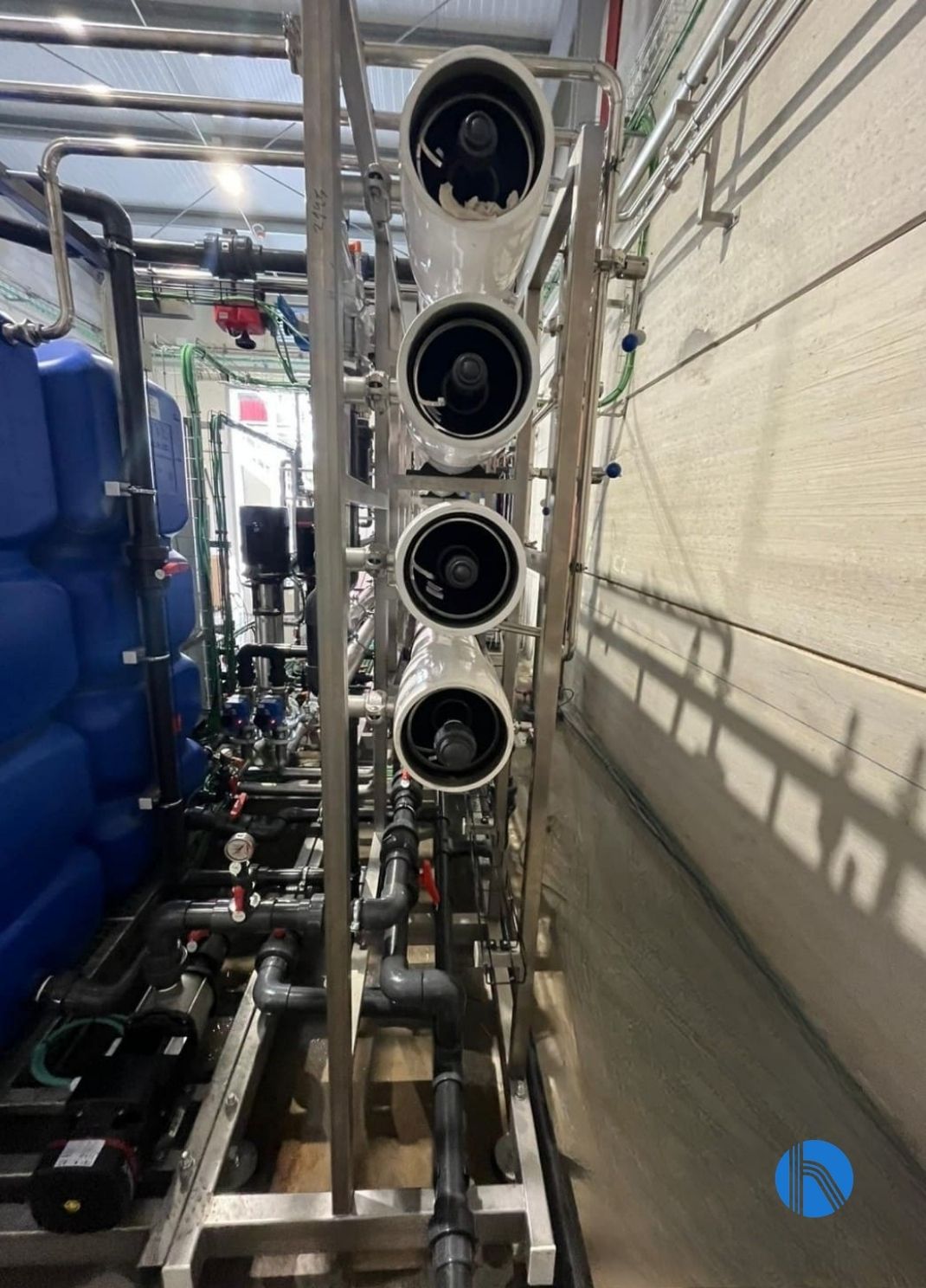
View of the RO pressure pipes
2.3 CIP-flushing membrane cleaning system
All membrane systems become fouled over time, to a greater or lesser extent depending on the pre-treatment system in place, requiring one to two cleanings per year. This system comprises a reagent preparation tank, a stainless-steel recirculation pump, and stainless-steel isolation valves for the stages and recirculation. The tank is filled automatically via a float valve connected to the same osmosis water line.
2.4 Instrumentation and control
The plant incorporates an advanced monitoring and control system that enables safe, efficient and fully traceable operation:
- Continuous measurement of key parameters:
-
- Conductivity
- Pressure
- Flow rate
- pH
- Instrumentation for ORP readings
- Process automation via PLC
- Alarms and protection systems to ensure system integrity
- Historical data logging for analysis and continuous improvement.
This level of control enables deviations to be anticipated, consumption to be optimized and water quality to be always assured.
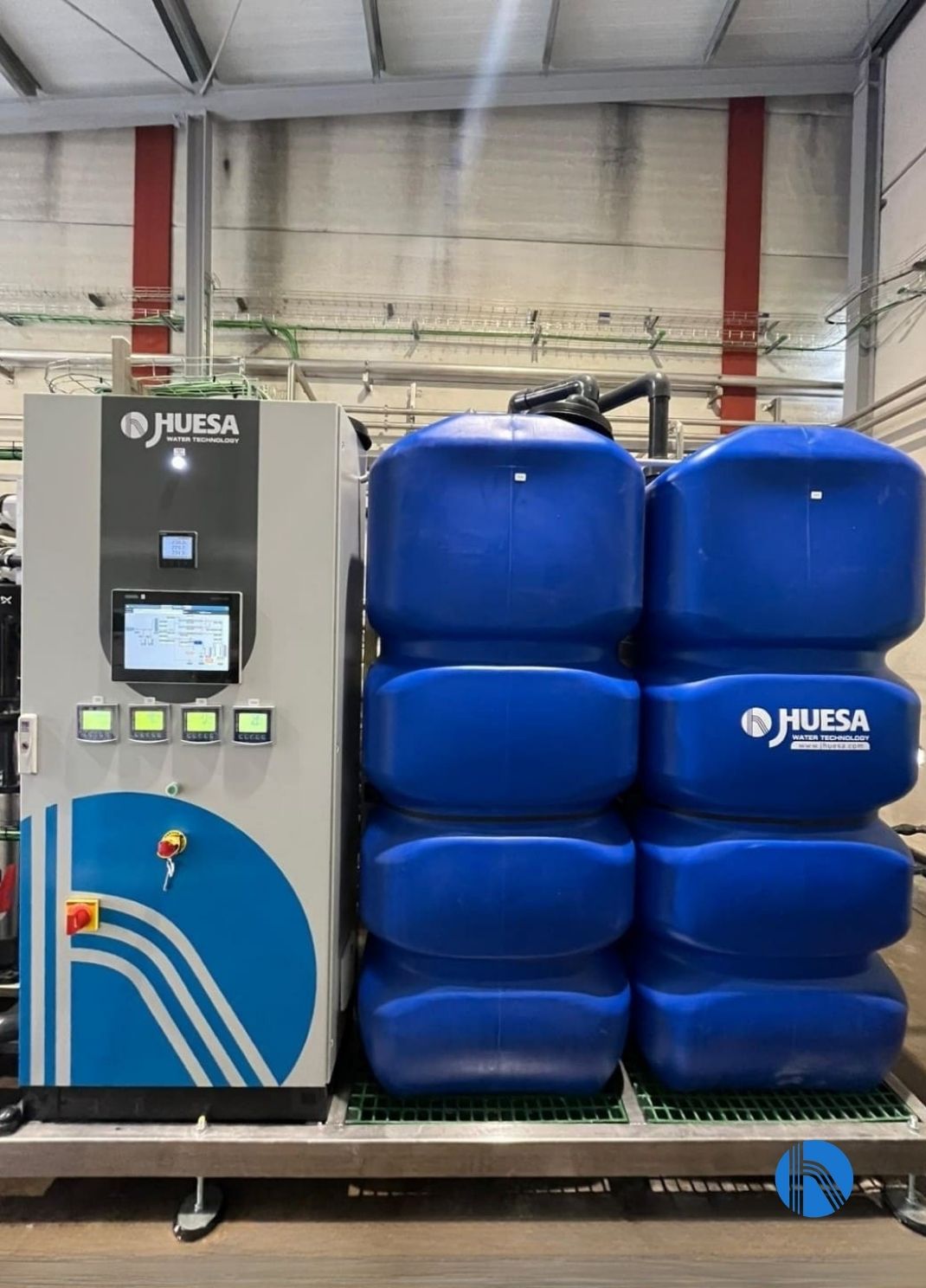
View of the control panel
3. Benefits for the client
The solution implemented by J. Huesa delivers direct value to our client on several levels:
1. A 40% increase in production capacity, in line with the production centre’s growth targets.
2. Optimization of investment through the reuse of assets by refurbishing the second reverse osmosis stage and a significant reduction in CAPEX compared to a completely new solution.
3. Water quality assurance: strict compliance with the requirements of the vegetable protein extraction process and high stability in permeate quality.
4. Operational efficiency:
– Reduction in operating costs thanks to an optimized design.
– Lower frequency of chemical cleaning (CIP) and longer membrane service life.
5. Sustainability:
– Efficient use of water resources.
– Optimization of chemical and energy consumption.
– Alignment with environmental and corporate responsibility policies.
4. Conclusions
The development of this water treatment plant highlights the importance of a bespoke engineering approach in demanding industrial environments.
The combination of dual-pass reverse osmosis technology, together with a smart revamping strategy, has enabled us to meet a significant growth challenge, whilst ensuring efficiency, sustainability and operational reliability.
This project reinforces the role of water treatment as a strategic element in the food industry, particularly in expanding sectors such as plant-based proteins, where water quality has a direct impact on the quality of the final product.