In industrial wastewater treatment, no two effluents are alike. Water composition varies depending on the industry, the production process and, even within the same facility, the production line operating on a given day. That is why at J. Huesa we always start with a preliminary assessment: raw water characterization, production process analysis and review of discharge or reuse targets before proposing any treatment technology.
This working methodology has led us to deliver highly diverse turnkey projects — ranging from an Omega-3 multinational company in Galicia to an industrial laundry network operating across Spain, Portugal and Andorra — applying the same engineering approach while designing plants that are fundamentally different from one another.
The laboratory makes the decisions before engineering does
Almost every project starts with samples on the laboratory bench rather than with engineering drawings. In the Omega-3 client project, prior to sizing the plant, Jar-Test trials were carried out using synthetic blends of the three wastewater streams generated by the process, comparing two scenarios: with phosphorus and without phosphorus. These tests defined the dosing rates and chemicals required for the physico-chemical stage, as well as the final design parameters (sample averages plus a safety factor).
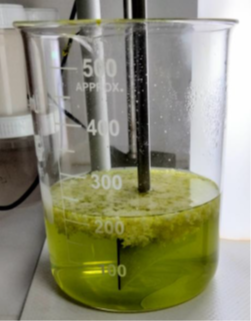
A view of one of the laboratory tests carried out
In the industrial laundry project, the initial approach was different. A direct treatment process was first tested using ceramic ultrafiltration membranes preceded by coagulation. The process worked but generated approximately 10% reject flow with an organic load that significantly increased disposal costs. Consequently, the laboratory team changed the strategy and installed two pilot-scale MBR systems operating in parallel — one equipped with submerged membranes and the other with external tubular membranes — to compare their performance under real operating conditions over several weeks. The result: identical analytical quality in terms of COD, BOD5 and surfactants, but the submerged membranes required three cleaning cycles while the external tubular membranes required none. The decision became self-evident.
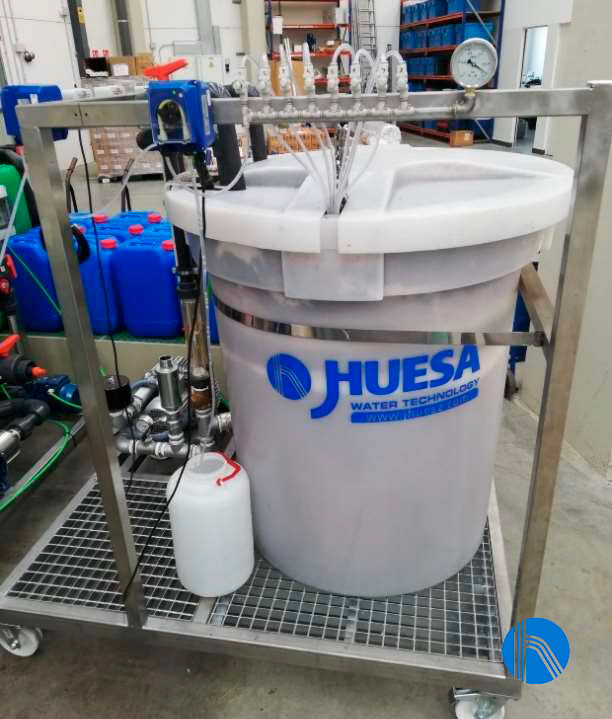
Submerged Membrane MBR Reactor
In the biotechnology industry project, pilot testing extended over several months and treated 12 different feed batches, precisely because the objective was to reuse water within the production process itself (zero liquid discharge policy). It was therefore essential to evaluate the MBR performance under variable feed conditions before implementing the reverse osmosis stage.
When each technology comes into play
Each solution is engineered through a specific combination of technologies — including pre-treatment, DAF flotation, biological treatment processes, polishing stages and sludge management — tailored to pollutant load, effluent variability and the destination of the treated water.
For the Omega-3 client, we designed and installed an industrial WWTP with a total treatment capacity of 17.35 m³/day (0.625 m³/h process flow plus CIP contribution), including a 27 m³ pumping chamber acting as an equalization tank, phosphorus reduction chamber and thermal buffer, cooling down the wastewater arriving at elevated temperature from the process before entering the biological stage. This is followed by a DAF unit incorporating its three stages — coagulation, neutralization and flocculation — removing most suspended solids, oils and greases, there by reducing the load reaching the external tubular membrane MBR system. Downstream, the sludge treatment line includes a screw dehydrator and polyelectrolyte dosing system. The entire plant was sized to comply with the discharge limits established for public sewer discharge by the Official Gazette of the Province of A Coruña.
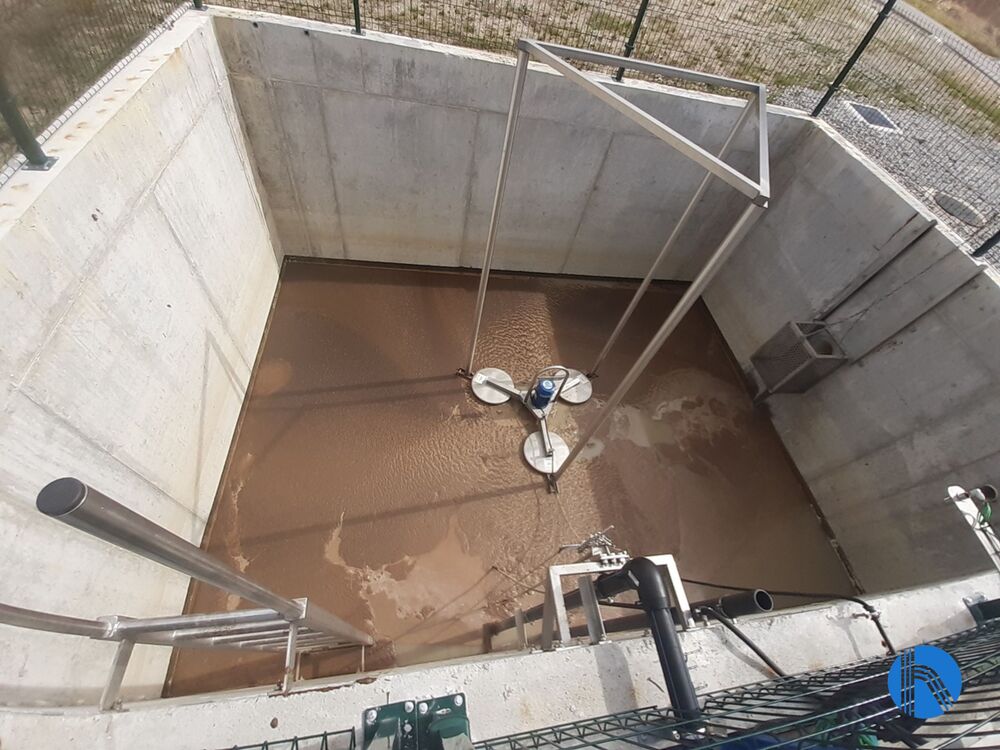
View of the homogenisation chamber
In the industrial laundry project, the process line is simpler: an equalization tank with pH correction through HCl dosing, a battery of ring filters with 0.200 mm mesh opening and automatic compressed-aircleaning, followed by a 182 m³ gross biological reactor built using prefabricated AISI 316 stainless steel panels. Average design flow rate: 150 m³/day, with peak flow reaching 6.25 m³/h. Once again, external tubular membranes were selected — not by default, but because pilot testing had demonstrated their superior performance.

Ring filtration system
The chemical industry project incorporates an additional treatment stage: downstream of the MBR, a reverse osmosis polishing system enables the client to reuse the treated water within the industrial process. Prior to RO, the permeate passes through a GRP activated carbon filter, and the treated water is stored in a closed GRP tank from which the client draws process water. The plant was designed with the second RO pass pre-installed but not initially commissioned, allowing operational performance validation before utilizing the full installed capacity.
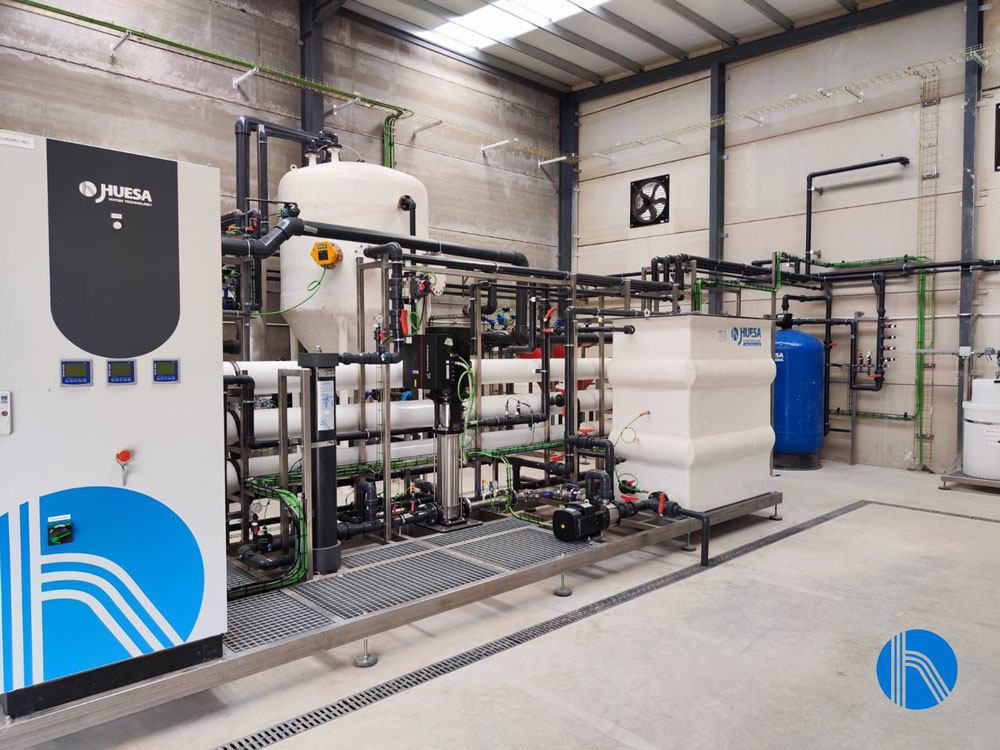
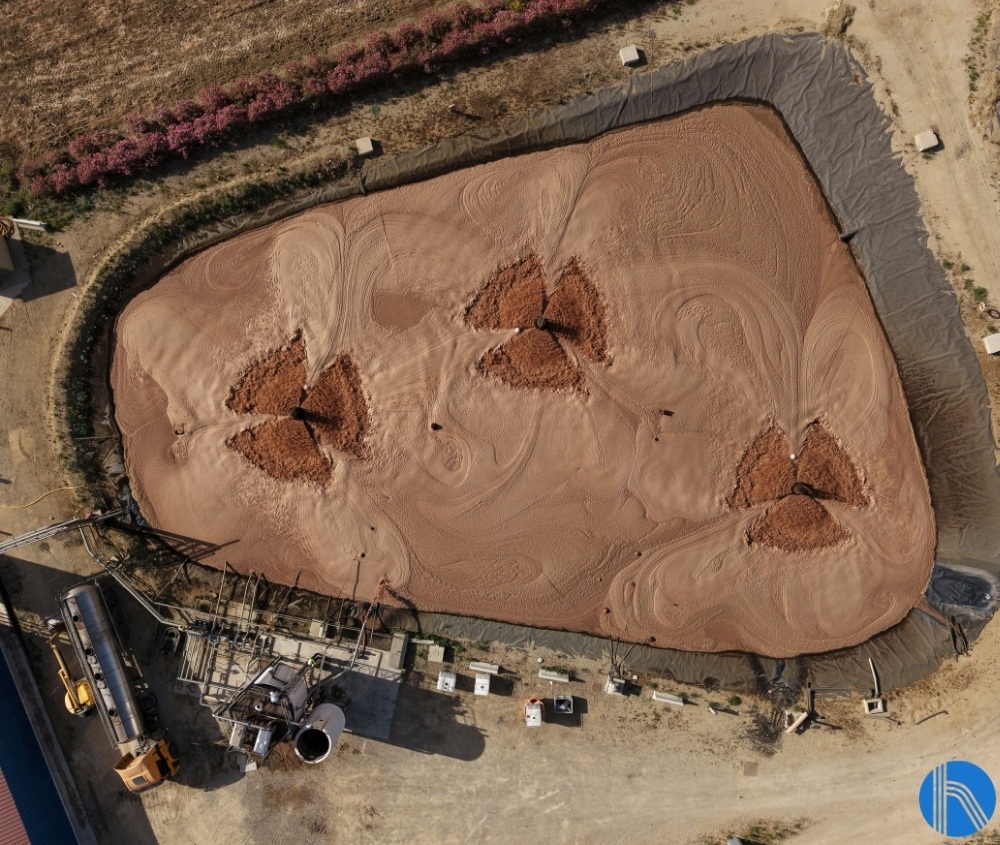
View of the treatment plant
Why MBR technology is repeatedly selected
MBR technology appears in all three projects — not because it is a trend, but because it delivers reliable performance. When dealing with biodegradable and variable effluents, the combination of biological treatment and membrane clarification produces a stable ultrafiltered effluent. In the laundry project, the treated water is discharged into a public watercourse, while in the chemical industry project it feeds directly into the reverse osmosis system without additional pre-treatment. Compared with submerged membranes, external tubular membranes consistently show lower fouling rates. The laundry pilot plant quantified this through the number of cleaning cycles required during the same operational period, and since then they have become our standard solution for variable-composition industrial effluents.
Water reuse, not only discharge
When clients can consider closing the water loop, wastewater treatment ceases to be merely an operating cost and becomes an integral part of the production process. This is precisely what the biotechnology company achieved in the previous case: water that was once discharged is now reused within the process after MBR and reverse osmosis treatment, fully aligned with its zero liquid discharge policy. Not every client is in this situation — in many cases, the primary objective remains compliance with sewer discharge limits — but whenever water quality and flow conditions justify it, reverse osmosis downstream of MBR technology provides the most effective solution.
What we deliver
A J. Huesa turnkey project covers every stage, from laboratory testing and pilot trials to in-house manufacturing, installation, commissioning and after-sales technical support. Plants are delivered fully instrumented (automatic valves, pressure switches, flow meters, pH and conductivity probes, etc.) and, in the most recent projects, integrated with PLC systems through IO-Link communication. Electrical panels include touchscreen interfaces for plant operation and are designed for seamless integration into the client’s SCADA system, including remote-control capabilities whenever required by plant operation. In broad terms, this is how we approach every project. Technologies may change. The methodology does not.