
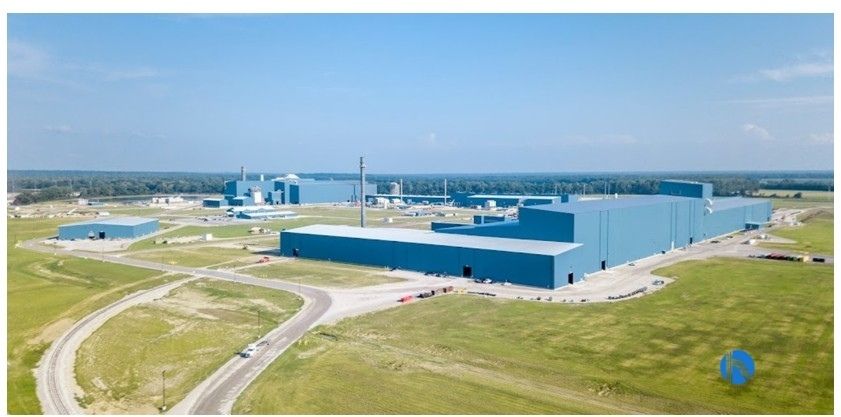
One of the greatest concerns of our century is directly related to water scarcity, a problem exacerbated by the effects of climate change, continuous population growth and uncontrolled consumption of this limited resource.
In this scenario, industries that use large volumes of water in their processes are increasingly aware of the need to implement reuse and regeneration systems that allow them to close their water cycle, reduce their dependence on water supply and minimize the environmental impact of their operations. This is the case in the steel industry, which depends on water as an essential operational resource.
From the preparation of raw materials to the cooling of furnaces, continuous casting and auxiliary equipment, water acts as a thermal vector, a means of transport and a mechanism of protection against extreme thermal stresses. Its high demand, combined with the need to maintain strict quality standards for each process (closed circuits, water supply, descaling and corrosion control systems), makes its management critical to ensuring efficiency, operational continuity and safety.
In an industrial context where pressure on water resources is growing and environmental regulations are becoming more stringent; steelworks are forced to optimize every litre. Improving recirculation circuits, reducing purges and implementing advanced treatments not only minimize consumption, but also extend the useful life of systems and reduce the overall water footprint.
Exploring water reuse solutions is no longer an option, but a strategic step to ensure competitiveness, sustainability, and resilience. It is precisely at this point that water treatment engineering provides decisive value, opening the door to technologies capable of transforming complex flows into circular resources.
In this context, today we share a success story consisting of the design, custom manufacture, supply, installation and commissioning of a regeneration system using ultrafiltration and reverse osmosis for a steel mill located in Arkansas, United States. This project has been developed in collaboration with a leading Spanish engineering firm that requested our services to carry out this turnkey project.
This solution represents an essential tool for transforming waste streams into a reusable resource, contributing to a more efficient, responsible and safe use of water in modern industry.
Objective and design parameters
The raw water to be treated consists of a mixture of cooling tower blowdown and effluent from a wastewater system that comprises a complex neutralization treatment chain, including the following stages: pH adjustment for metal precipitation, coagulation and flocculation, DAF clarification and sand filtration.
The objective of the system is to obtain reclaimed water with characteristics very similar to the feed water used in the plant, always ensuring compliance with a maximum conductivity of 200 μS/cm.
To make this possible, the technical team at J. Huesa, together with the client’s engineering department, opted for the design of a water treatment plant comprising ultrafiltration and reverse osmosis, membrane technologies that ensure constant and stable permeate quality.
Specifically, the system consists of a pre-treatment followed by two ultrafiltration skids that produce 180 m³/h of ultrafiltrated water, which then passes to a reverse osmosis stage with a capacity of 75%, yielding 135 m³/h of osmotised water.
The design data for each of the treatment lines is shown below:
| DESIGN DAT FOR ONE LINE | |
|---|---|
| Feed flow | 100,00 m³/h |
| Ultrafiltrate flow | 90,00 m³/h |
| Recovery | 89.90 % |
| Backwash flow | 442,00 m³/h |
| CEB flow | 230,00 m³/h |
| RO DESIGN DATA FOR ONE LINE | |
|---|---|
| Feed flow | 90,00 m³/h |
| Permeate flow | 67,50 m³/h |
| Reject flow | 22,50 m³/h |
| Recovery | 75 % |
Technical description of the regeneration solution (UF + RO)
The main stages of the process and the equipment that make up the solution are summarized below:
Pre-treatment
In this pre-treatment phase, the raw water is collected in a reservoir from which it is pumped through a mesh filter, followed by a dosing and analytical control system. A pump system (1 + 1R) with a flow rate of 214 m3/h is used for this purpose.
This pre-treatment ensures:
• Reduction of coarse solids
• Control of critical parameters (pH, turbidity, oxidizability)
• Hydraulic stability to protect subsequent stages
• Minimization of membrane fouling
This step is key to ensuring that ultrafiltration works continuously, even in the face of variations in the steelworks’ internal flows.
Ultrafiltration: high-efficiency physical barrier
The water then passes through an ultrafiltration system, which is the first major barrier in the process, removing suspended solids, colloids and part of the organic matter.
Each of the two lines consists of 32 ultrafiltration units (4 lines in each module), with a membrane area of 60 m². The system is mounted on an AISI 360 stainless steel skid with its own integrated CIP (cleaning in place) system, which ensures that permeability is maintained and prolongs the service life of the membranes.
In addition, the system has an integrated backwash system with a 1 + 1R membrane system with a capacity of 230 m3/h.
The treated water is then stored in an ultrafiltrated water storage tank, ensuring continuous and stable operation.
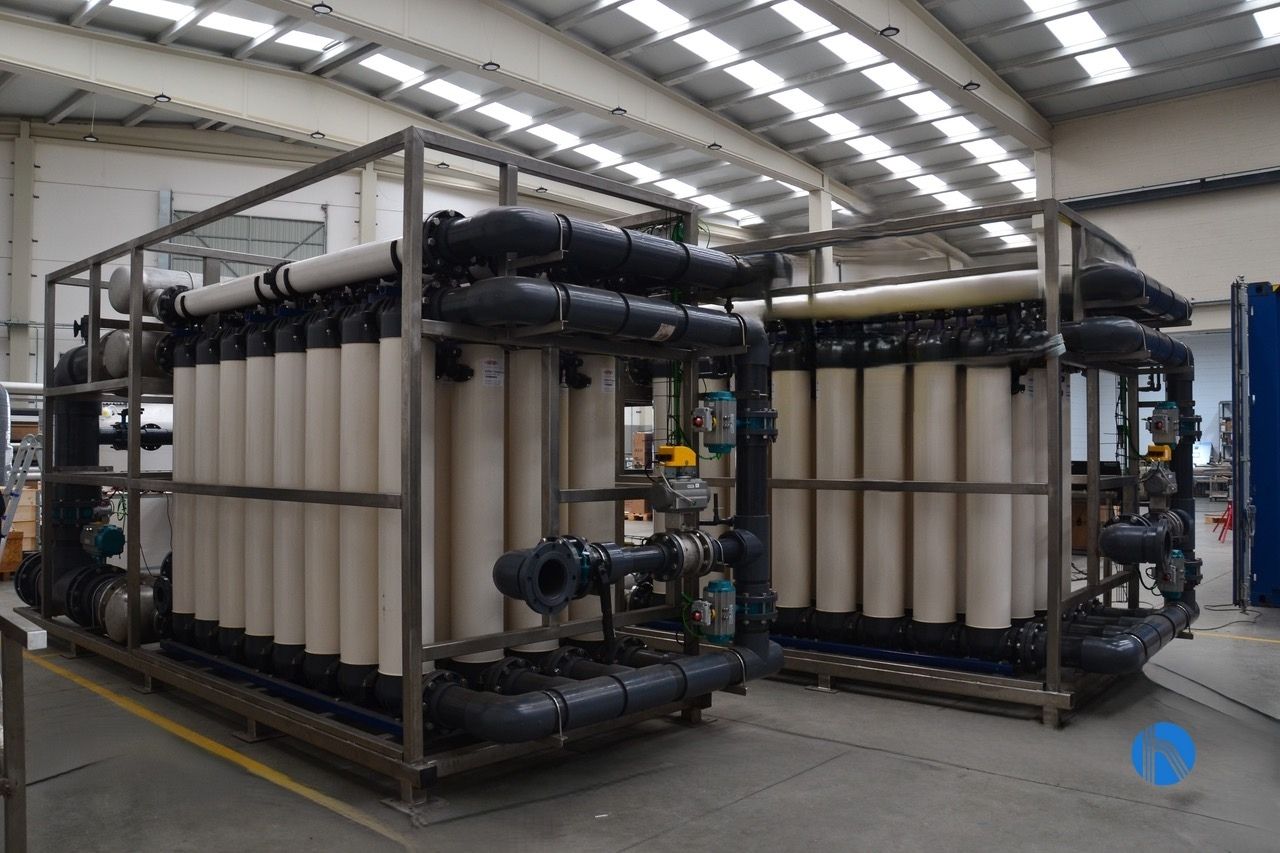
Ultrafiltration skid view
Among the operational advantages provided by this stage of the process are:
• Efficient removal of suspended solids
• Retention of colloids and high molecular weight organic matter
• Drastic reduction in turbidity (< 1 NTU)
• Direct protection of the reverse osmosis system
In addition, its modular design allows it to adapt to future growth in flow rates or new process requirements.
Reverse Osmosis: high-quality water for reuse
After UF, the pre-treated water is sent to the reverse osmosis system, configured in two stages and with optimized recovery.
The osmosis train works on complex streams, but thanks to pre-treatment and intelligent fouling management, it reliably achieves the target conductivity of ≤ 200 μS/cm.
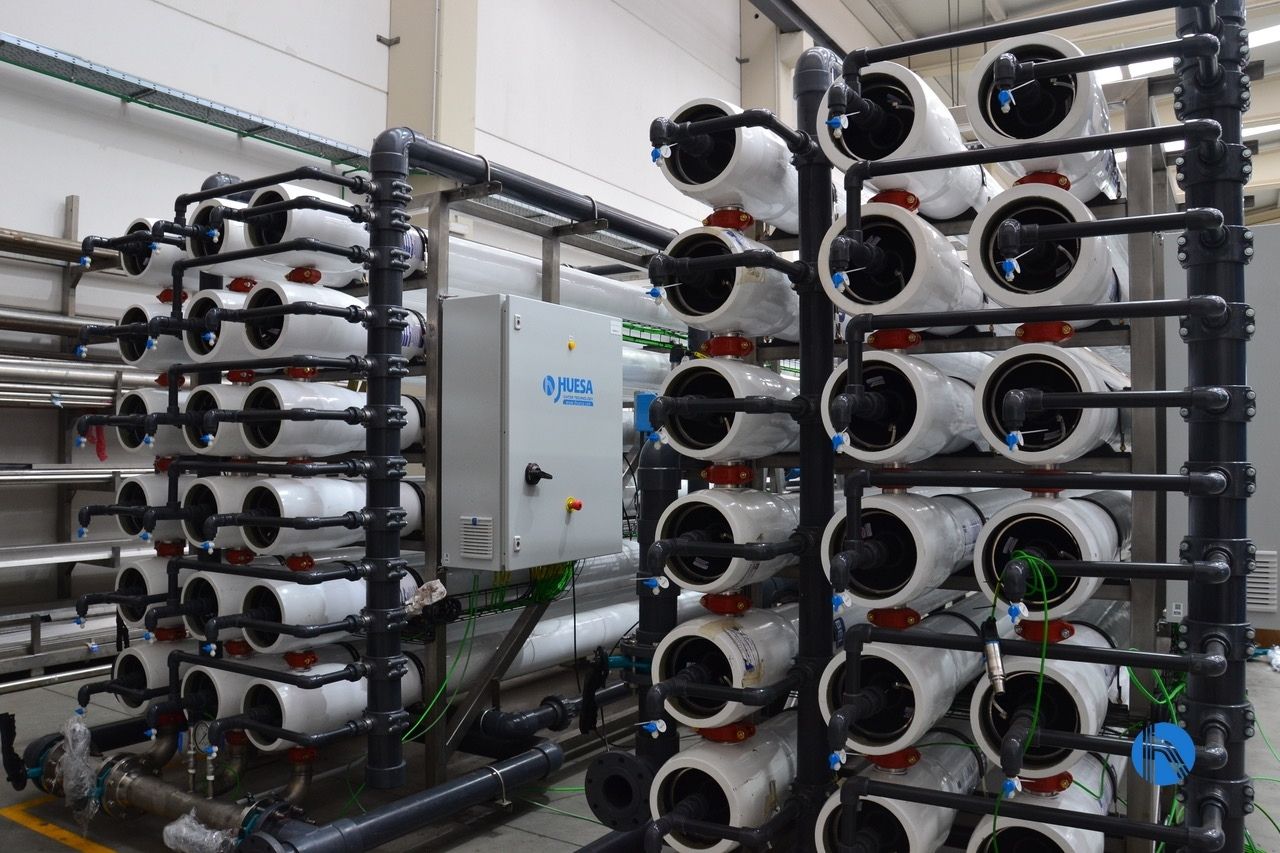
RO Skid View
Highlights of the RO design:
• Low-energy membranes to maximise efficiency
• Anti-scaling strategies and dynamic fouling control
• Isolation of salts and dissolved compounds critical to steelmaking
• Complete online monitoring of pressures, flow rates and quality
The result is reclaimed water suitable for reintegration into industrial circuits, reducing dependence on external sources.
The system incorporates a specific CIP that ensures proper maintenance of the membranes and their long-term performance. The resulting permeate water is of stable quality and suitable for reuse. In this phase, the reverse osmosis unit treats a flow rate of 180 m³/h and produces approximately 135 m³/h of
osmotised water.
Automation, integration and control in the plant
The solution manufactured by J. Huesa includes a control system based on industrial PLC and supervision via HMI and remote communication.
Key features:
• Fully automated start-ups and sequences
• Continuous analytical control (conductivity, turbidity, pH, ORP, transmembrane pressure, among
others)
• Predictive alarms and intelligent cleaning management
• Integration with the customer’s digital architecture in the USA
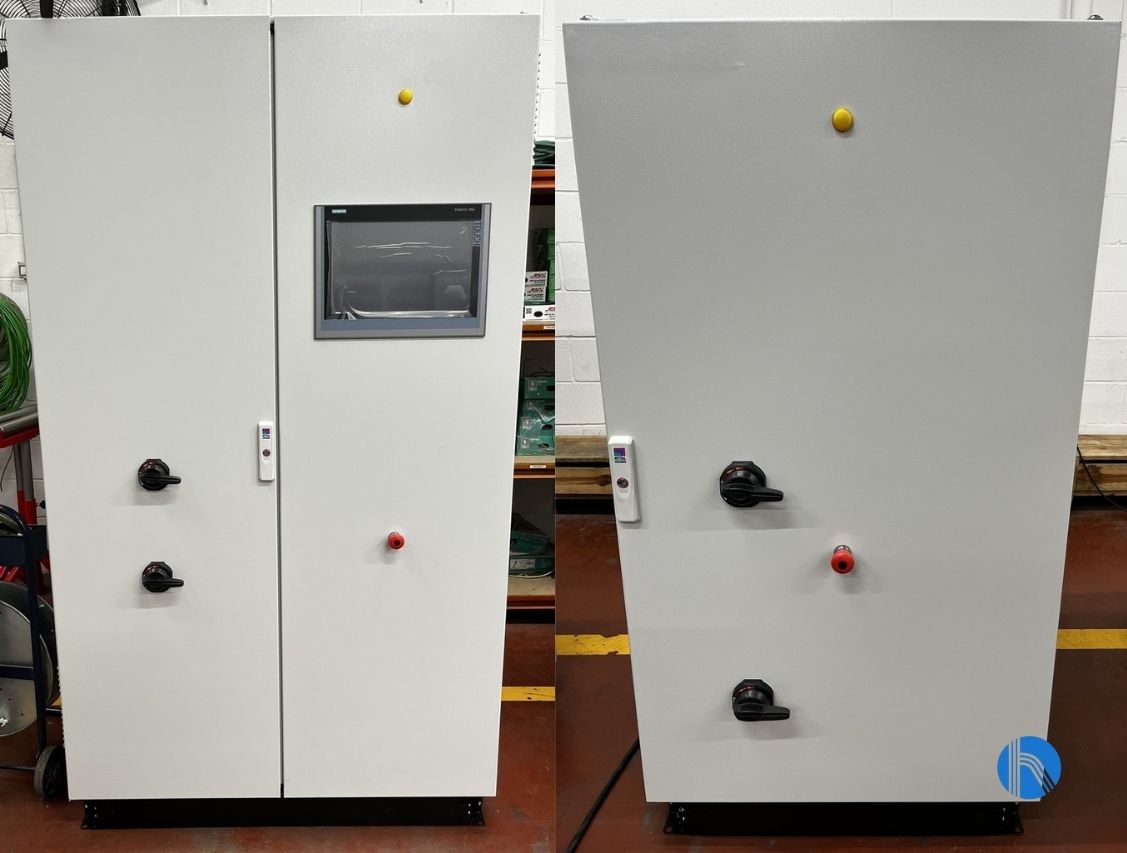
Front view of two of the control panels
This level of automation ensures robust, stable and safe operation, even in processes as demanding as steelmaking.
Benefits for the steelworks: efficiency, savings and sustainability
The implementation of this UF + RO system provides direct and measurable improvements:
• Modular design using independent skids
• Automation and online analytical control
• Easy operation and low maintenance
• Energy and chemical consumption optimization
• High reuse rate, reducing discharges and raw water consumption, key in areas with water stress
• Reduction in discharge volume, complying with regulations and minimising impact
• Operational stability, regardless of wastewater variability
• Cost optimization by recovering a resource that was previously lost
• Reinforcement of the plant’s circular economy model
All of this contributes to more competitive and resilient operations that are aligned with the environmental standards already required by the sector.
Conclusiones: avanzar hacia una gestión hídrica sostenible
The implementation of a combined ultrafiltration and reverse osmosis system in this steelworks demonstrates how water engineering can transform complex flows into useful resources, reducing dependence on external water and minimizing the volume of waste. Solutions like this mark a turning point in how the industry understands water management: not as an unavoidable expense, but as an opportunity to generate efficiency, operational safety and real sustainability.
At J. Huesa, we work from a clear premise: every litre counts. That is why we promote technologies that enable our clients to move towards more responsible operating models, integrating water reuse as a strategic axis for competitiveness and environmental compliance. Our more than five decades of experience in the integral water cycle allows us to design robust systems, adapted to the particularities of each process and aimed at maximizing the value of the resource.
This project reaffirms our commitment: to accompany industry in its transition towards circular models, where water is no longer consumable but becomes a key asset for the future. We will continue to work to develop solutions that combine innovation, sustainability and measurable results, contributing to more efficient and environmentally friendly water management.
If your company is looking to move towards more efficient and sustainable water management, at J. Huesa we can accompany you every step of the way: from flow analysis and conceptual design to the implementation and operation of advanced treatment and reuse systems.
We offer you our experience, technology and integrated vision of the water cycle to help you turn your challenges into opportunities.
Let’s discuss how to optimize water use in your industrial process. We are ready to work with you to develop the next solution that will boost your competitiveness and reduce your environmental impact.