A solution designed to accelerate the development of next-generation membrane technologies
The advancement of desalination and water treatment processes largely depends on the evolution of reverse osmosis membrane technologies. Before being implemented in industrial applications, these solutions must undergo rigorous testing capable of replicating the most demanding operating conditions.
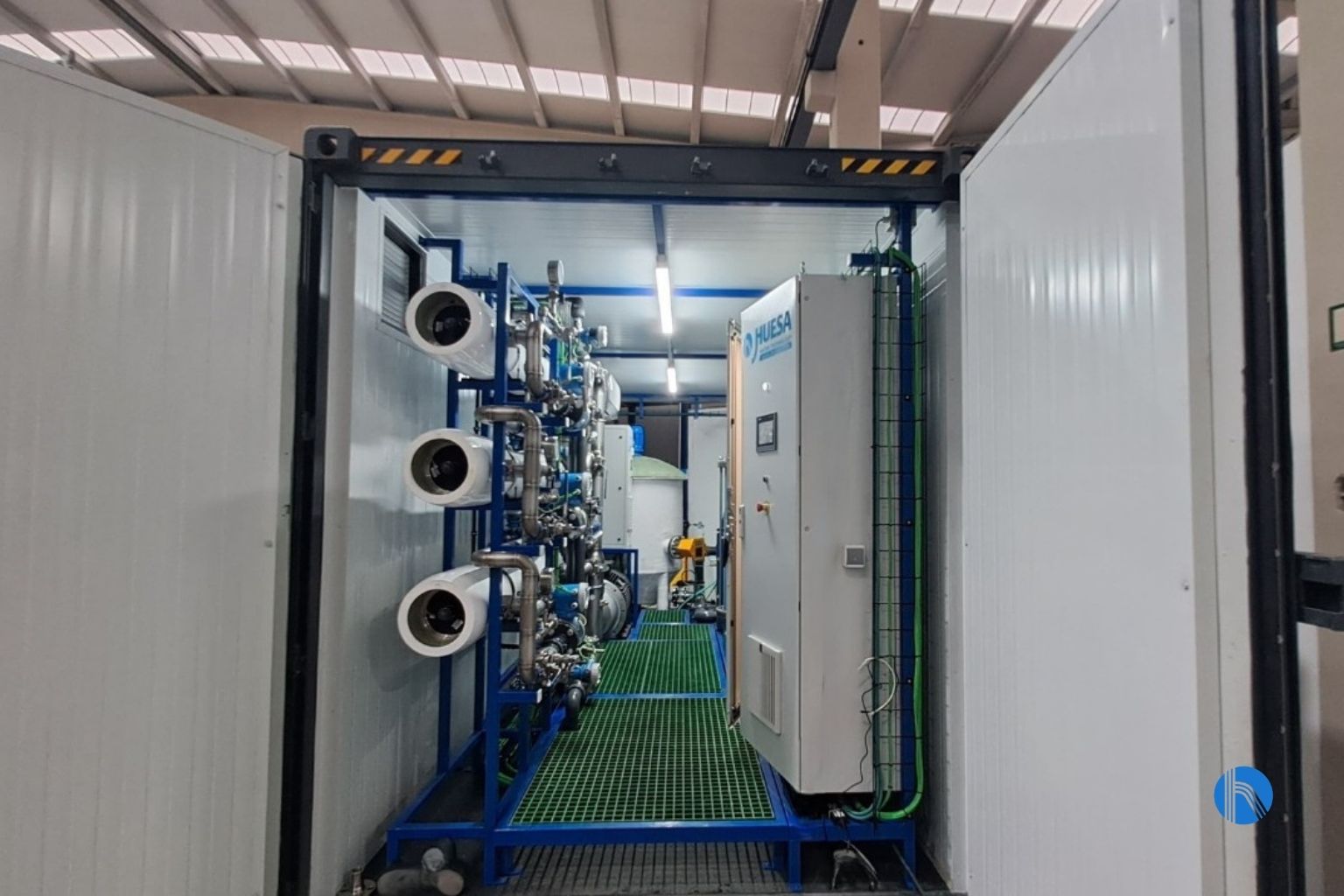
To meet this challenge, J. Huesa has designed and manufactured a reverse osmosis pilot plant intended for the evaluation and validation of advanced membrane technologies under high-salinity and highpressure conditions. Specifically developed for R&D activities, the installation provides reliable data on the performance, efficiency and durability of new membrane generations under conditions closely resembling real desalination environments.
This project is the result of technological collaboration between J. Huesa and and DuPont Water Solutions within the framework of the Ultra Brine Recovery project, an initiative focused on the development and validation of advanced solutions for the desalination of high-salinity streams. The combination of engineering expertise and applied innovation has enabled the development of a testing platform capable of generating high-value knowledge to support the advancement of membrane technologies.
The challenge: reproducing extreme operating conditions with maximum reliability
The main challenge was to develop an experimental platform capable of adapting to different testing configurations while accurately reproducing highly demanding operating conditions.
The installation was required to perform both individual membrane tests and trials with three membrane elements connected in series, simulating the performance of the first or last positions within a pressure vessel in a reverse osmosis system.
In addition, the plant had to operate under particularly demanding parameters:
• Salinity levels of up to 220 g/L.
• Operating temperatures of up to 35°C.
• Design pressures of up to 80-82 bar.
• Controlled pH conditions.
• High reliability in data collection and process monitoring.
Another key requirement was ensuring the highest levels of process safety, minimizing risks associated with high-pressure operation and highly concentrated saline streams.
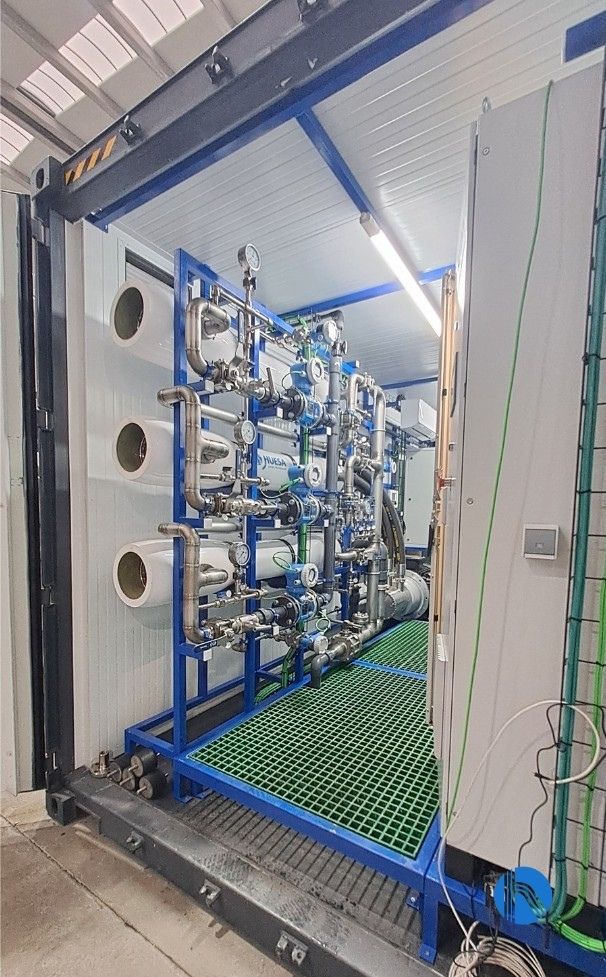
The plant configuration allows testing with one or multiple membrane elements to reproduce different operating scenarios.
A pilot plant specifically engineered for advanced desalination research
To meet these requirements, J. Huesa developed a fully customized containerized pilot plant designed to provide maximum operational flexibility and testing repeatability.
The installation incorporates a range of systems carefully selected to ensure precise control of critical process parameters, including:
• Feed water storage and preparation systems.
• Pre-filtration stages for membrane protection.
• High-pressure pumping equipment.
• Configurable membrane testing modules.
• Advanced process instrumentation.
• PLC- and HMI-based automation and control systems.
Unlike conventional water production facilities, this installation has been conceived as an experimental platform capable of generating valuable data and knowledge for the development of next-generation membrane technologies.
Flexibility for testing different membrane configurations
One of the plant’s key advantages is its ability to adapt to a wide variety of testing protocols.
The system can operate with a single membrane element for Standard Testing (STD) procedures or with three membrane elements connected in series, enabling performance evaluation under conditions representative of different positions within an industrial reverse osmosis pressure vessel.
This flexibility makes the installation a strategic tool for validating membrane designs, materials and configurations intended for increasingly demanding desalination applications.
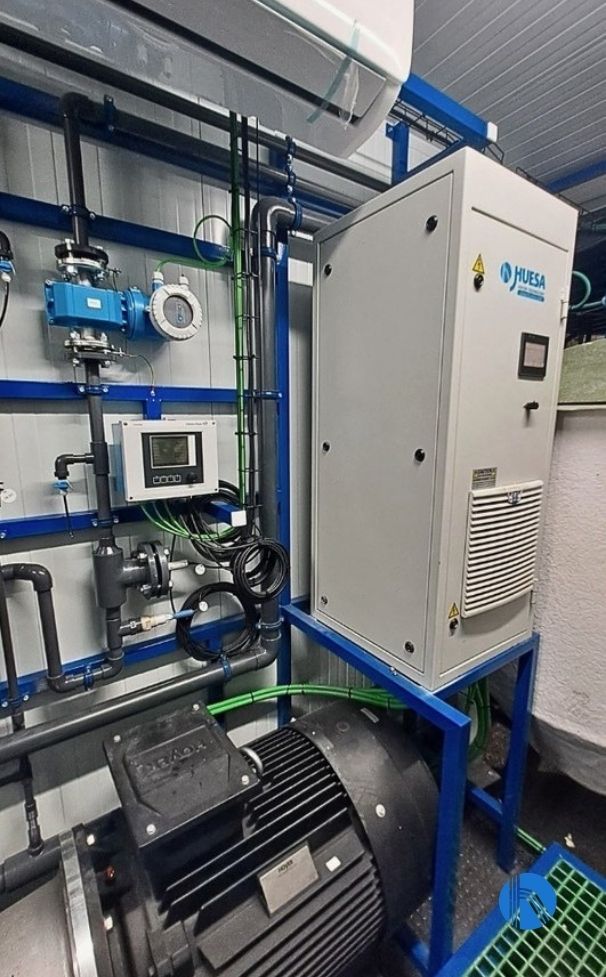
The plant’s mechanical and hydraulic design enables the reproduction of extreme salinity and pressure conditions within a fully controlled environment.
Process safety as a core design principle
Process safety was a fundamental aspect considered from the earliest engineering stages of the project.
The required operating pressures and salinity levels led to the adoption of a conservative design approach, including the selection of materials and components capable of withstanding severe operating conditions while minimizing potential overpressure scenarios.
The combination of robust mechanical design, advanced instrumentation and integrated protection systems ensures safe and reliable operation throughout testing activities.
Technology driving innovation in water treatment
More than a conventional pilot plant, this installation represents a technological platform dedicated to applied research and the development of solutions that will shape the future of desalination.
Its ability to reproduce extreme operating conditions provides highly valuable information for improving membrane efficiency, durability and overall process performance, contributing to more sustainable and efficient water treatment systems.
The project demonstrates the value of collaboration between companies specialised in the development of membrane technologies and engineering firms capable of transforming advanced research requirements into real and fully operational solutions. In this context, the cooperation between J. Huesa and DuPont Water Solutions within the framework of the Ultra Brine Recovery project has enabled the development of an advanced platform for the testing and evaluation of membranes under extreme salinity and pressure conditions, contributing to the validation of new solutions for the desalination of high-salinity streams.
Every improvement in membrane performance can contribute to making desalination more efficient, sustainable and accessible. Having testing platforms capable of validating these technologies under extreme conditions is a key step in accelerating this evolution.
With projects such as this, J. Huesa reinforces its position as a specialist in custom-engineered water treatment solutions, demonstrating its ability to tackle complex technological challenges and support the development of the water technologies of tomorrow.