The Role of Boilers in the Tomato Industry
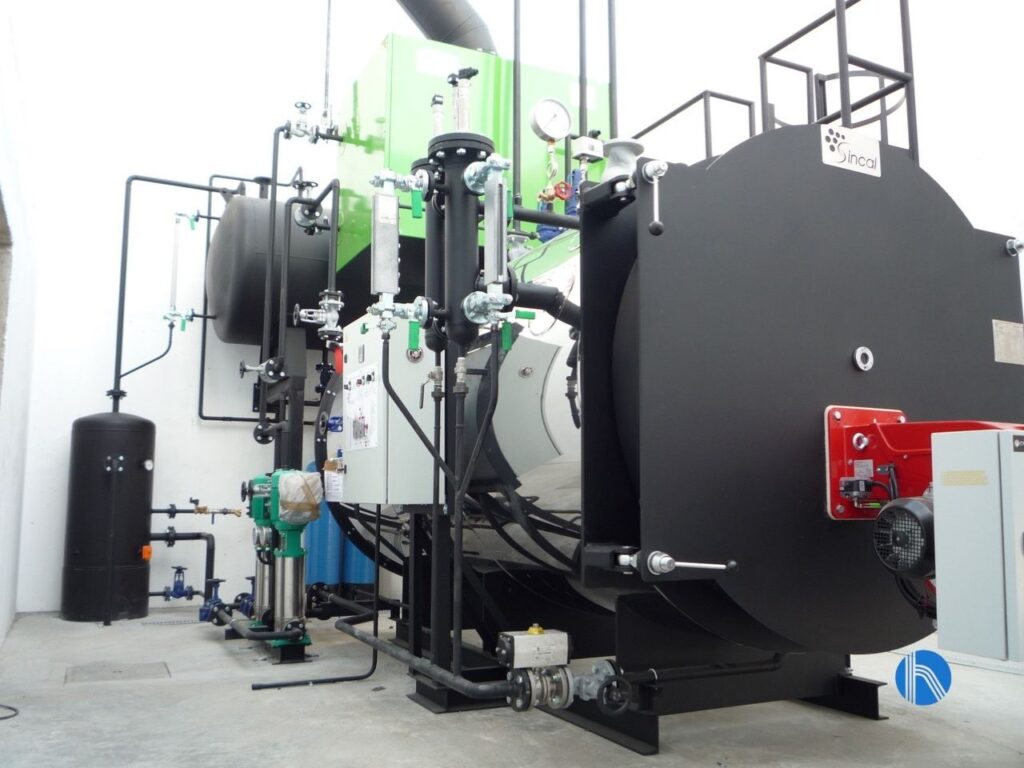
Boilers are an essential element in ensuring the continuity and efficiency of the tomato processing production process. Their main function is to generate steam; a versatile energy source used at various critical stages of the production process. Steam is used for blanching the fruit to facilitate peeling and for concentrating the tomato in evaporators. This ensures both the quality of the final product and the optimization of processing times.
Boilers also provide the necessary heat for sterilization and pasteurization, which are essential for food safety and extending the shelf life of preserves. In addition, boilers play a key role in cleaning and disinfection routines (CIP), where steam acts as an effective and hygienic tool. They are also used in auxiliary services that maintain the operational stability of the plant.
In this context, the quality of the water supplied to the boiler is crucial: it directly influences the reliability, efficiency, and service life of the equipment, affecting operating costs and the sustainability of the process.
For all these reasons, the efficient operation of a boiler depends not only on its design and operating conditions, but also—and crucially—on the quality of the water that feeds it. Scale, corrosion or impurities can reduce the system’s efficiency, increase energy consumption and even cause unscheduled shutdowns. Therefore, ensuring the suitability of the water supply is critical to guaranteeing the safety, continuity and profitability of processes in the tomato industry.
The risks of inadequate feeding in boilers
Steam is as important to the tomato industry as the delicate balance that makes it possible. If the feed water is not properly treated, the boiler is exposed to a series of phenomena that directly impact its performance and operational safety.
The most frequent of these are:
- Scale is caused by the deposition of calcium, magnesium and silica salts on heat exchange surfaces. These deposits act as insulators, reducing the efficiency of heat transfer, increasing fuel consumption and raising the risk of localised overheating.
- Corrosion is associated with dissolved oxygen and acid gases (CO₂, SO₂) present in the water. Corrosion degrades metal surfaces and compromises the integrity of pipes and boilers, potentially leading to leaks or serious structural failure.
- Carryover occurs when steam carries water droplets containing dissolved salts and solids, reducing the quality of the steam and affecting downstream equipment such as heat exchangers or autoclaves.
- Sludge and deposit formation are caused by suspended particles or chemical precipitates that accumulate in areas of low circulation in the boiler. This reduces its operating capacity and increases the need for purging.
These problems, despite being distinct in nature, share a common denominator: they lead to increased operating costs, reduced plant availability and, in extreme cases, can result in unscheduled shutdowns that directly impact industry productivity.
The suitability of feed water for boilers in the food industry is a key concern
The prevention of scaling, corrosion and carryover begins long before the boiler is started up. It begins with the correct preparation of the water that feeds it. The treatment strategy must be designed according to the quality of the water available at source (well, mains, reuse, etc.) and the operational requirements of the boiler and the associated production process.
The treatment of feed water is usually organised into successive stages that combine physical and chemical technologies:
- Physical-chemical pre-treatment: This includes multi-layer, cartridge and self-cleaning filtration systems for removing suspended solids, and sometimes the addition of reagents (such as coagulants and inhibitors) to improve the initial quality of the water. The aim is to protect subsequent stages and ensure a stable supply.
- Demineralization: To reduce the salts responsible for scaling, processes such as reverse osmosis or ion exchange (cationic and anionic) are employed. Depending on the required level of demineralization, either complete deionization or partial demineralization may be necessary, adjusted according to the boiler design parameters.
- Degassing: Removing dissolved oxygen and CO₂ is essential to prevent corrosion. This can be achieved using thermal degassers, which use steam to expel gases, or chemical deoxygenation with specific additives.
- Chemical conditioning: Even after the above processes, chemical control treatments must be applied, such as corrosion inhibitors, residual hardness sequestrants and pH-regulating products. Dosage must be monitored continuously and the conductivity, alkalinity and dissolved oxygen values adjusted as necessary.
- Operational control and purging: Implementing a controlled purging programme prevents excessive salt and solid build-up inside the boiler. Regular analytical monitoring and online instrumentation systems ensure the boiler operates efficiently and safely.
This treatment scheme ensures that the feed water meets the required parameters for reliable boiler operation, thereby extending its useful life, reducing energy consumption, and minimising unplanned shutdowns. In the tomato industry, for example, where production is concentrated in short, intense periods, having a robust and flexible treatment system is crucial to ensuring a continuous steam supply and maintaining the competitiveness of the process.
Success story: Boiler water treatment in the domestic industry
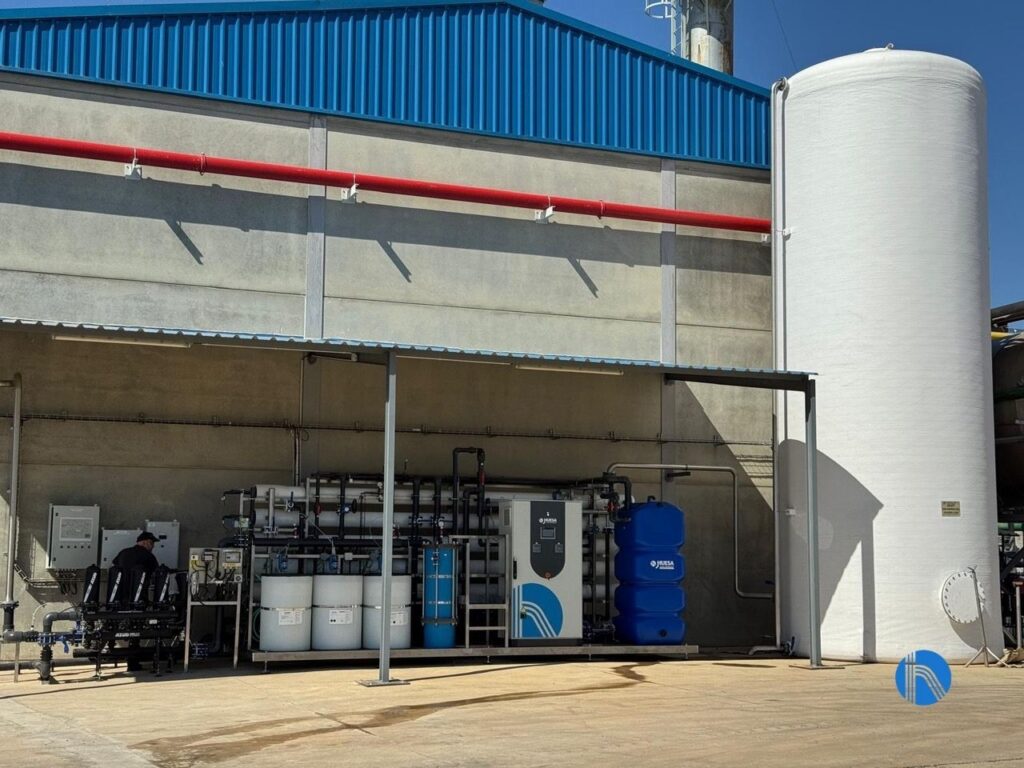
A notable illustration of the significance of treating feed water can be observed in Spain’s tomato industry. In this particular instance, a multinational company required a solution to produce feed water for its boilers. At this facility, the quality of the raw water was found to be sub-optimal. This was due to high levels of salts and dissolved oxygen, which have been identified as the root cause of recurring issues with scaling and the risk of corrosion in the boilers.
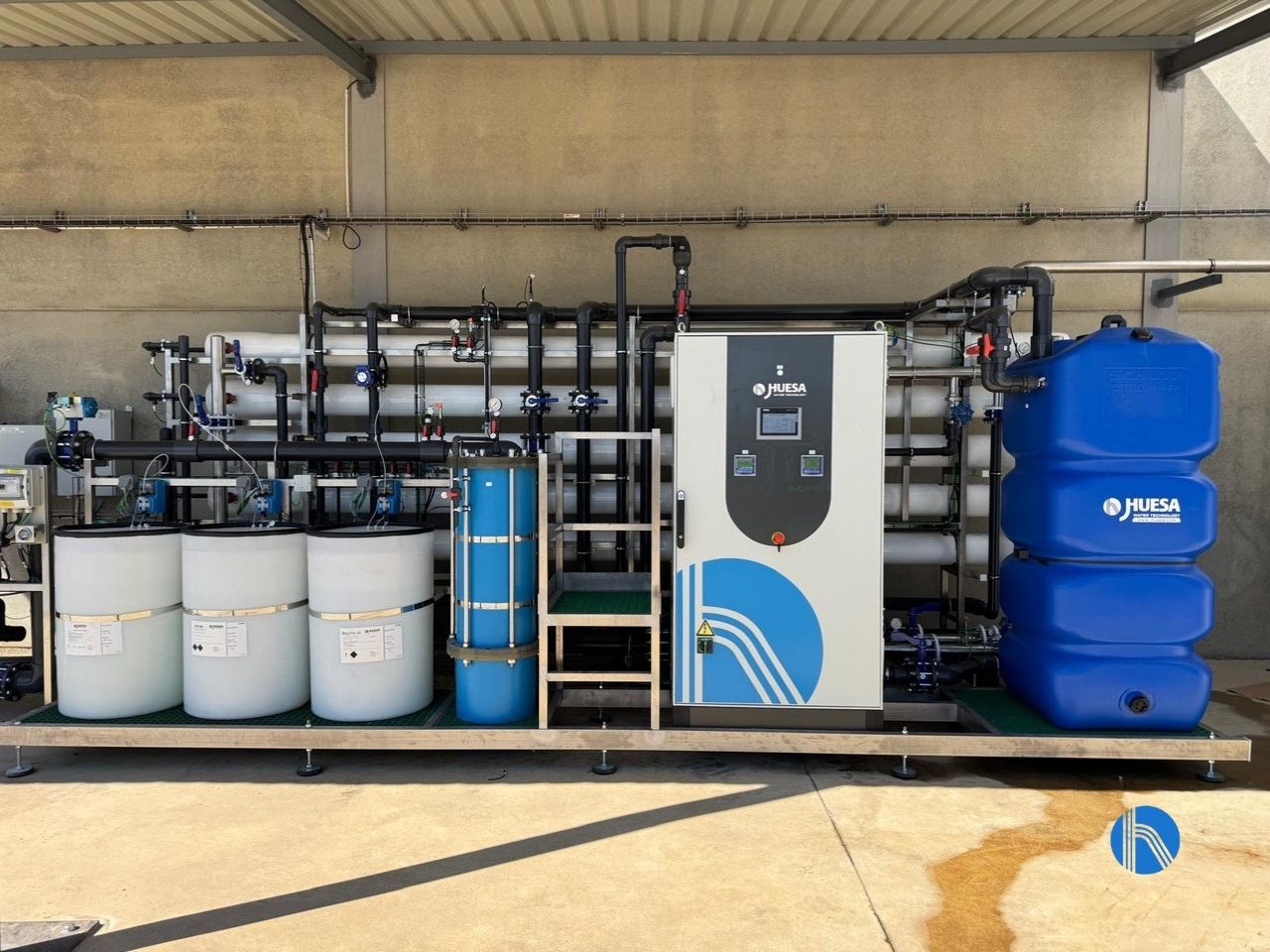
Following a technical study, J. Huesa was commissioned to design, custom-manufacture and commission a water treatment line. The aim of the project was to obtain salinity-free water, and the line comprises the following sub-processes:
- Pretreatment
- Reverse Osmosis
- CIP cleaning equipment
Design Flow rate
| Feed Flow rate | 35,7 m³/h |
| RO permeate flow rate | 25 m³/h |
| RO reject flow rate | 10,7 m³/h |
| Total daily RO permeate flow rate | 600 m³/day |
| Operating hours | 24 horas/day |
| Used of treated water | Feed to Boiler |
Pretreatment
The first stage of the treatment process involves disinfection using sodium hypochlorite and a self-cleaning, single-stage, 50 μm ring filter system to reduce the quantity and particle size of suspended solids in the feed water.
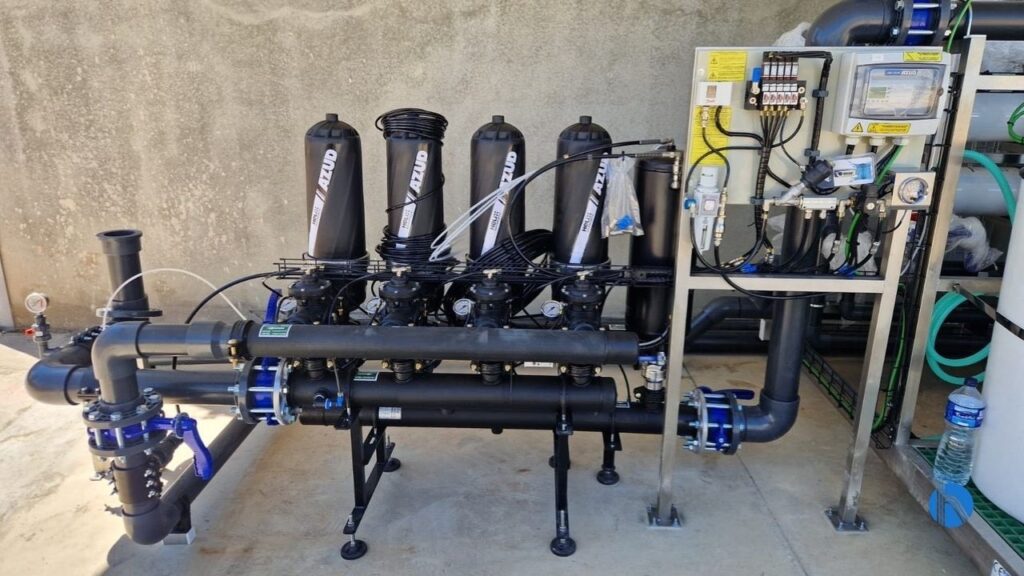
The equipment consists of a single stage comprising four filter bells with 1000 μm solid passage rings. Each of these consists of a filter element made up of slotted discs that retain particles larger than the filter grade. These discs combine surface and depth filtration to maximise filtration precision and safety.
The equipment is self-managed by its own electronics and enters cleaning mode as programmed by the controller without interrupting the production of filtered water. The amount of water discharged during these cycles is minimal. To improve washing efficiency, the system incorporates a compressed air feature.
The system performs two independent phases in each filtration unit simultaneously in the filtration equipment at specific times: the filtration phase and the cleaning phase.
Reverse Osmosis
Reverse osmosis is a natural physical phenomenon that occurs when two solutions with different solute concentrations are separated by a semi-permeable membrane. The solutions then equalize in concentration until equilibrium is reached. The analytical characteristics of the raw water supply indicate that it should be treated using semi-permeable reverse osmosis membrane separation techniques.
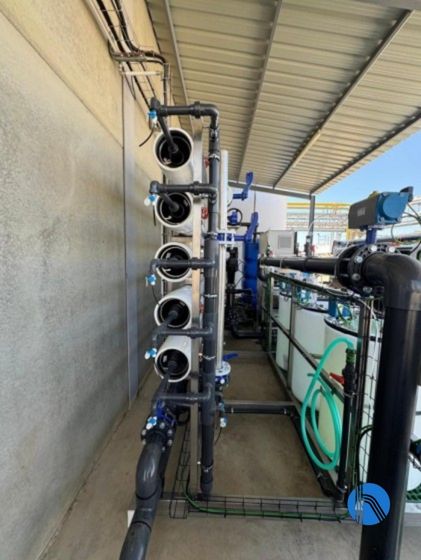
Reverse osmosis membranes are highly chemically resistant, operating within a pH range of 2 to 13. This makes them easy to clean and recover, as they can withstand a wide variety of cleaning chemicals. The membranes are mounted in pressure housings made of wound GRP.
Separation selectivity is 90-95% for monovalent ions, greater than 98% for divalent ions, and 99.9% for mineral or organic colloids, bacteria and viruses.
CIP cleaning equipment
To clean these membranes properly, the plant uses a CIP (Cleaning-in-Place) system that circulates a chemical solution through the circuit manually for a set period.
Disinfection is another common pre-treatment step that prevents biological saturation of the membrane. It is crucial to ensure that the membrane material and disinfectants are compatible, as incompatibility can result in permanent damage to the osmosis membrane.
Conclusions
In the tomato industry, boilers are not just auxiliary equipment; they support critical processes such as blanching, concentration and sterilisation. Therefore, the quality of the water supply is a determining factor in the efficiency, safety and sustainability of the entire plant, and should not be considered a secondary issue.
An effective treatment strategy protects the boiler from scaling, corrosion and carryover, optimises energy consumption, minimises unscheduled downtime, and ensures operational continuity in campaigns where every hour of production is crucial.
In this sense, investing in feed water treatment should be viewed less as an additional cost and more as a means of ensuring competitiveness, productivity and environmental responsibility in an increasingly demanding sector.